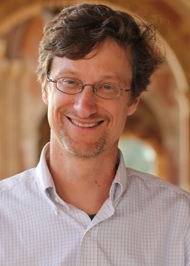
Richard Lesure
VerifiedUniversity of California, Los Angeles · Anatomy and Cell Biology
Active 1993–2025
About
Richard Lesure is a professor at UCLA in the Department of Anthropology, holding the Marilyn Beaudry-Corbett Endowed Chair in Mesoamerican Archaeology. His research interests include the interpretation of ancient art, archaeology of early village societies, sociopolitical dynamics, and the origin of social inequality, with a focus on Mesoamerica. He has contributed extensively to the understanding of prehistoric Mesoamerican societies through his work on archaeological sites, figurines, and social transformations. Lesure has authored and edited numerous publications, including monographs and journal articles, that explore early Mesoamerican ceremonial centers, demographic transitions, and social changes in the region. His academic background includes a Ph.D. from the University of Michigan, obtained in 1995.
Research topics
- Geography
- Archaeology
- Political Science
- Sociology
- Cartography
- Demography
- History
- Economic geography
- Ancient history
Selected publications
Corpse treatment in a Late Formative bell-shaped pit at La Laguna, Tlaxcala, Mexico
Folia Quaternaria · 2025-01-01
articleOpen accessA bell-shaped storage pit in central Mexico was converted in the fifth century BC into a repository for human corpses. It was used sequentially to place and later selectively remove the remains of at least four adults. The concomitant addition of fill has separated the different funerary gestures with unusual clarity. We use the piece-plotting of individual bones and other pit contents, osteological and stratigraphic analysis, and ceramic refitting to formulate hypotheses regarding the sequence in which different corpses and offerings were placed in the pit, disarticulated, dispersed, and otherwise modified upon reentry, or removed from the pit altogether. We try to reconstruct the logic of the ritual sequence by applying four simple interpretive principles in order to distinguish between a “tomb” and a “charnel” scenario. We conclude that reentry and bone removal were anticipated, and that the pit was used recurrently in the early stages of a prolonged and complex mortuary ritual. Comparisons with other contexts of the Middle and Late Formative lead us to briefly consider the relevance and possible meaning of double burial and the use of certain bones as relics or as raw material to be shaped into artifacts. Some of these practices were probably related to the importance of ancestors in the belief system. Bell-shaped pits were a convenient receptacle for letting corpses decay in a controlled fashion, but the form and function of features used in mortuary rituals do not map onto each other in simple ways.
2021-06-29
book-chapter1st authorCorrespondingBeveled-Rim Bowls and Innovative Aggrandizers:
2021-06-29
book-chapter1st authorCorrespondingOverview of Excavations, Formation Processes, and Refuse Samples
2021-06-29
book-chapter1st authorCorrespondingThe Material Culture of Paso de la Amada:
2021-06-29
book-chapter1st authorCorresponding2021-06-29
book-chapterSenior author2021-06-29
book-chapter1st authorCorresponding2021-06-29
book-chapter1st authorCorrespondingThe Constructed Landscape of Paso de la Amada and Its Social Implications:
2021-06-29
book-chapter1st authorCorrespondingSeriation of the Refuse Deposits
2021-06-29
book-chapter1st authorCorresponding
Frequent coauthors
- 17 shared
Robert M. Rosenswig
- 16 shared
Antonia E. Foias
- 16 shared
Véronique Bélisle
Millsaps College
- 16 shared
Marfa Gutierrez
Consejo Nacional de Investigaciones Científicas y Técnicas
- 16 shared
Beniamino Volta
- 16 shared
Christina T. Halperin
Université de Montréal
- 16 shared
Rosemary A. Joyce
- 16 shared
Andrea Cucina
- Resume-aware match score
- Save to shortlist
- AI-drafted outreach
See your match with Richard Lesure
PhdFit ranks faculty by your research interests, methods, and publications — grounded in their actual work, not templates.
- Free to start
- No credit card
- 30-second signup