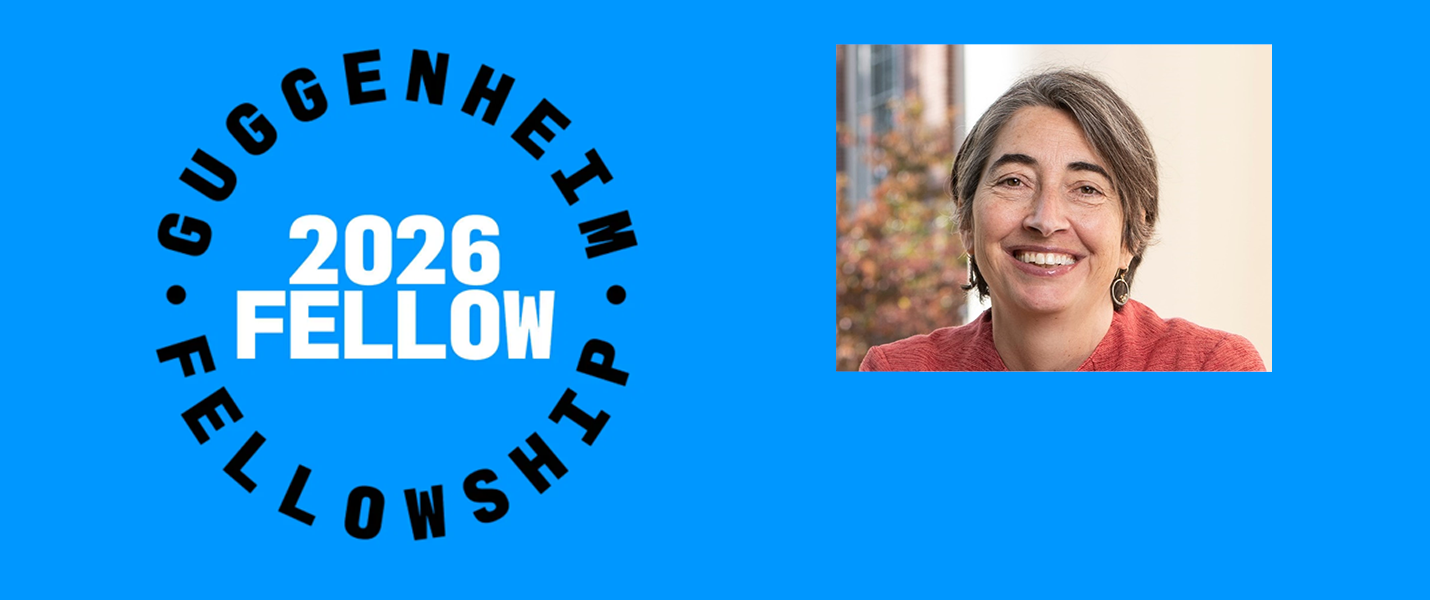
About
Dr. Alexandra Z. Worden’s research focuses on the fate and transport of carbon in the oceans, emphasizing the biological entities responsible for biogeochemical transformations within the broader ocean environment. Her current work centers on photosynthetic microorganisms, integrating genomics, evolutionary biology, and ecology to explore microbial roles in carbon dioxide uptake and its subsequent fate. Her group develops methods and technologies for sea-going studies of protists and their viruses, aiming to quantify their contributions to global primary production, activities in the deep sea, and future ocean trajectories. She has pioneered techniques for targeting uncultivated microbes in the ocean, investigating their activities and interactions, and has developed methods for studying environmentally relevant algae under climate change simulations, including genetic manipulation of these species. In addition to her research at the Marine Biological Laboratory (MBL), she serves as a Professor Part-Time at the University of Chicago’s Department of Geophysical Sciences. Her academic background includes a B.A. in History from Wellesley College, with a focus on post-colonial Africa, and studies in Earth, Atmospheric, and Planetary Sciences at MIT. She completed her Ph.D. at the University of Georgia’s Odum School of Ecology, examining growth and mortality controls on marine cyanobacteria as a NASA Earth Systems Science Fellow. In 2000, she was an NSF Postdoctoral Fellow at Scripps Institution of Oceanography, where she demonstrated the significant contribution of unicellular eukaryotes to marine photosynthesis. She has held professorships in the USA and Germany, founding the Ocean Ecosystems Biology Unit in Kiel. Her honors include being a Fellow of the American Academy of Microbiology, a Fellow of the Max Planck Institute for Evolutionary Biology, a Visiting Scholar at Harvard University, and a member of the German National Academy of Sciences Leopoldina.
Research signals
Five dimensions sourced from public faculty / publication signals. Sign in to compare against your own profile and see your match score.
Research topics
- Biology
- Evolutionary biology
- Genetics
- Ecology
- Botany
- Computational biology
- Oceanography
Selected publications
Single cell genomics reveals plastid-lacking Picozoa are close relatives of red algae
Nature Communications · 2021 · 113 citations
- Biology
- Evolutionary biology
- Botany
The endosymbiotic origin of plastids from cyanobacteria gave eukaryotes photosynthetic capabilities and launched the diversification of countless forms of algae. These primary plastids are found in members of the eukaryotic supergroup Archaeplastida. All known archaeplastids still retain some form of primary plastids, which are widely assumed to have a single origin. Here, we use single-cell genomics from natural samples combined with phylogenomics to infer the evolutionary origin of the phylum Picozoa, a globally distributed but seemingly rare group of marine microbial heterotrophic eukaryotes. Strikingly, the analysis of 43 single-cell genomes shows that Picozoa belong to Archaeplastida, specifically related to red algae and the phagotrophic rhodelphids. These picozoan genomes support the hypothesis that Picozoa lack a plastid, and further reveal no evidence of an early cryptic endosymbiosis with cyanobacteria. These findings change our understanding of plastid evolution as they either represent the first complete plastid loss in a free-living taxon, or indicate that red algae and rhodelphids obtained their plastids independently of other archaeplastids.
Small phytoplankton dominate western North Atlantic biomass
The ISME Journal · 2020 · 112 citations
- Biology
- Oceanography
- Ecology
The North Atlantic phytoplankton spring bloom is the pinnacle in an annual cycle that is driven by physical, chemical, and biological seasonality. Despite its important contributions to the global carbon cycle, transitions in plankton community composition between the winter and spring have been scarcely examined in the North Atlantic. Phytoplankton composition in early winter was compared with latitudinal transects that captured the subsequent spring bloom climax. Amplicon sequence variants (ASVs), imaging flow cytometry, and flow-cytometry provided a synoptic view of phytoplankton diversity. Phytoplankton communities were not uniform across the sites studied, but rather mapped with apparent fidelity onto subpolar- and subtropical-influenced water masses of the North Atlantic. At most stations, cells < 20-µm diameter were the main contributors to phytoplankton biomass. Winter phytoplankton communities were dominated by cyanobacteria and pico-phytoeukaryotes. These transitioned to more diverse and dynamic spring communities in which pico- and nano-phytoeukaryotes, including many prasinophyte algae, dominated. Diatoms, which are often assumed to be the dominant phytoplankton in blooms, were contributors but not the major component of biomass. We show that diverse, small phytoplankton taxa are unexpectedly common in the western North Atlantic and that regional influences play a large role in modulating community transitions during the seasonal progression of blooms.
Genetic tool development in marine protists: emerging model organisms for experimental cell biology
Nature Methods · 2020 · 172 citations
- Biology
- Evolutionary biology
- Ecology
Diverse microbial ecosystems underpin life in the sea. Among these microbes are many unicellular eukaryotes that span the diversity of the eukaryotic tree of life. However, genetic tractability has been limited to a few species, which do not represent eukaryotic diversity or environmentally relevant taxa. Here, we report on the development of genetic tools in a range of protists primarily from marine environments. We present evidence for foreign DNA delivery and expression in 13 species never before transformed and for advancement of tools for eight other species, as well as potential reasons for why transformation of yet another 17 species tested was not achieved. Our resource in genetic manipulation will provide insights into the ancestral eukaryotic lifeforms, general eukaryote cell biology, protein diversification and the evolution of cellular pathways.
Recent grants
NSF · $49k · 2022–2024
NSF · $300k · 2009–2015
NSF · $984k · 2016–2022
Unveiling the contributions and regulation of picoeukaryotic phytoplankton in oceanic environments.
NSF · $204k · 2008–2010
Frequent coauthors
- 104 shared
Camille Poirier
GEOMAR Helmholtz Centre for Ocean Research Kiel
- 70 shared
Charles Bachy
GEOMAR Helmholtz Centre for Ocean Research Kiel
- 56 shared
Chang Jae Choi
University of Florida
- 55 shared
Susanne Wilken
University of Amsterdam
- 54 shared
Bernard Henrissat
Centre National de la Recherche Scientifique
- 50 shared
Elisabeth Hehenberger
Czech Academy of Sciences, Biology Centre
- 50 shared
Sebastian Sudek
- 49 shared
Hervé Moreau
Biologie Intégrative des Organismes Marins
Labs
Ocean EcoSystems Biology UnitPI
Awards & honors
- Fellow of the American Academy of Microbiology
- Fellow of the Max Planck Institute for Evolutionary Biology…
- Member of the German National Academy of Sciences Leopoldina
- NASA Earth Systems Science Fellow
- Resume-aware match score
- Save to shortlist
- AI-drafted outreach
See your match with Alexandra Worden
PhdFit ranks faculty by your research interests, methods, and publications — grounded in their actual work, not templates.
- Free to start
- No credit card
- 30-second signup