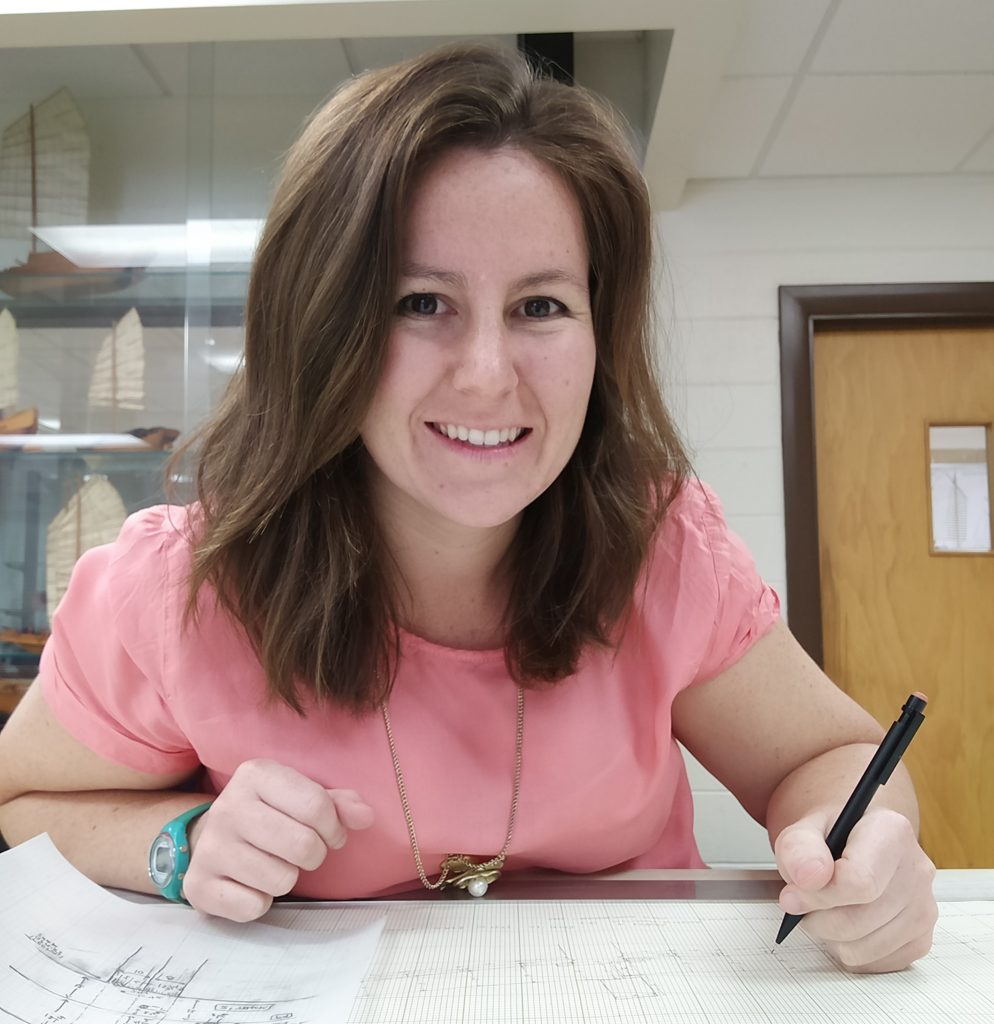
Carolyn Kennedy
· Instructional Assistant ProfessorVerifiedTexas A&M University · Anthropology
Active 2002–2025
About
Dr. Carolyn Kennedy is an Instructional Assistant Professor in the Department of Anthropology at Texas A&M University and serves as the Associate Director of the Center for Maritime Archaeology and Conservation. She earned her Ph.D. in Nautical Archaeology from Texas A&M University in 2019, with a specialization in ship construction, artifact conservation, and the maritime history of northeast North America. Her research explores the maritime history and nautical archaeology of this region, focusing on ship construction and technological change from the post-medieval through early industrial periods. Dr. Kennedy investigates how European shipbuilding traditions were adapted to North American environments and how ships functioned as tools of colonization and symbols of cultural exchange. Her expertise includes American shipbuilding, with extensive research on 18th- and 19th-century vessels, including naval ships from the Revolutionary War and War of 1812, merchant ships, and early steamboats. Her work emphasizes how American shipwrights adapted construction methods to local resources and cultural contexts, influencing broader maritime industries. She is also interested in archaeological artifact conservation, analytical methods in shipwreck interpretation, and public archaeology to engage communities in maritime heritage. Dr. Kennedy directs the Gaspé Maritime Archaeology Project and co-directs the Philadelphia Gunboat Research Initiative, among other projects, focusing on themes of naval warfare, industrial innovation, cross-cultural interaction, and underwater resource preservation in the face of climate change. At Texas A&M, she teaches courses in nautical archaeology, historical archaeology, artifact conservation, ship reconstruction, public archaeology, and scientific diving, integrating classroom, lab, and field research to provide experiential learning opportunities for students.
Research topics
- Art
- Geography
- Humanities
- Artificial Intelligence
- Computer Science
- Cartography
- Archaeology
- Construction engineering
- Architectural engineering
- Marine engineering
- Engineering drawing
- Engineering
- Visual arts
- Mechanical engineering
- Environmental science
- Civil engineering
Selected publications
A Call to Action Regarding Vinegar Syndrome Degradation of 1:1 Drawings in Nautical Archaeology
The International Journal of Nautical Archaeology · 2025-05-30
articleSenior authorChallenging Exoticization: Maritime Archaeology Logistics in West Africa and East Canada
MAINSHEET · 2025-12-01
articleOpen access1st authorCorrespondingMaritime archaeology often leads researchers to far-flung locations. Africa is often acknowledged in Western academic spheres as a challenging archaeological fieldwork destination due to logistical issues like minimal internet resources, language barriers, and unfamiliar legal and physical landscapes. However, these traits are by no means exclusive to the African continent, and perceived difficulty is not a reason to ignore the vast potential of maritime archaeology in Africa. This article explores archaeological practice in two seemingly different regions: Greenville, Sinoe County, southeastern Liberia, and Gaspé Bay, Québec, eastern Canada. A focused look shows how these two areas are actually not so different. Work in these regions has responded to and worked within environmental and climate constraints, engaged communities of diverse stakeholders, battled internet and data access, adjusted to site destruction and topographical change, and worked within funding constraints to pursue new and exciting avenues of study that otherwise would not happen. Ultimately, the conditions of a maritime city or town in which research is based are far less reflective of a country’s wealth and resources than they are of local resources and practice, even in today’s globalized world. The comparison of these two projects brings to light the issue that most maritime archaeologists face: logistically, maritime archaeology can be challenging regardless of a country’s status on somewhat problematic global development indices. Thus, the long-cited issue of “logistics” for dismissing attempts to study African maritime archaeology is unfounded. By emphasizing the commonalities in the constraints and opportunities of our archaeological efforts, we seek to underline the universality of these challenges and our responses to them.
An Analysis of an 18th-Century Sailing Lighter Discovered Along the Alexandria, VA, Waterfront
The International Journal of Nautical Archaeology · 2025-05-22
articleSenior authorFour 19th-Century Steamboats in Shelburne Shipyard, Lake Champlain, Vermont, USA
The International Journal of Nautical Archaeology · 2024
1st authorCorresponding- Archaeology
- Geography
- Environmental science
Archéologiques · 2023-06-02
article1st authorCorrespondingGaspé’s abundant maritime subsistence resources such as whales and cod drew European fishermen for centuries. Exploiting these rich fishing resources required vessels that were well-suited to the challenging geography. These challenges pushed shipwrights to develop new nautical technologies which were implemented in the ships’ construction. The Gaspé Maritime Archaeology Project (GMAP) seeks to study these developing technologies through the archaeological ship remnants in the waters around Gaspé. The 2022 field season pursued this research through a remote-sensing survey of Gaspé Bay and Malbay and by studying a shipwreck on a beach in Cap-des-Rosiers believed to be a 19th-century oceangoing ship.
Traveller Impressions of Lake Champlain Steamboats, 1827-1842
The Northern Mariner / Le marin du nord · 2022 · 1 citations
1st authorCorresponding- Humanities
- Humanities
- Geography
In the first half of the nineteenth century, Lake Champlain became increasingly famous for its magnificent passenger steamboats. Not only were residents of the Champlain Valley filled with pride over these vessels, but the steamers earned international acclaim. This article presents primary source evidence describing Lake Champlain’s Golden Age steamers from local, regional, and international travellers’ accounts which describe the appearance and operations of these lake boats from the 1820s and 1830s. Despite travel diaries including problematic biases, this evidence fills gaps in our knowledge of the build of these steamboats left by the analyses of their archaeological remains.
 Dans la première moitié du XIXe siècle, le lac Champlain est devenu de plus en plus connu pour ses magnifiques bateaux à vapeur à passagers. Non seulement les résidents de la vallée du lac Champlain étaient fiers de ces navires, mais les navires ont aussi acquis une renommée internationale. À partir de témoignages obtenus de sources primaires, cet article décrit les bateaux à vapeur de l’âge d’or du lac Champlain suivant les récits de voyageurs locaux, régionaux et internationaux qui traitent de l’apparence et des opérations de ces bateaux au cours des années 1820 et 1830. Malgré des carnets de voyage qui comportent des partialités problématiques, ces témoignages comblent les lacunes de nos connaissances sur la construction de ces bateaux à vapeur laissées par les analyses de leurs vestiges archéologiques.
Digital Applications in Archaeology and Cultural Heritage · 2020 · 6 citations
- Computer Science
- Artificial Intelligence
- Engineering
2020-01-01
article1st authorCorrespondingPublic Nautical Archaeology of the Phoenix (II) and City Place Schooner Projects
Society for Historical Archaeology · 2019-01-01
article1st authorCorrespondingThe History and Archaeology of the Lake Champlain Steamboat Phoenix II (1820-1837)
OakTrust (Texas A&M University Libraries) · 2019-02-28 · 1 citations
articleOpen access1st authorCorrespondingSteam-propelled vessels transformed North American life in the nineteenth century, but many aspects of the boats still elude us, particularly for the dynamic decades of experimentation and adaptation before 1850. Fortunately, a material record was preserved in the form of wrecks. One of these surviving hulls is Phoenix II, built in 1820 for passenger service on Lake Champlain. The fifth passenger steamboat to operate on the lake, the sidewheel-equipped Phoenix II was once known as the fastest boat in the world. Traveling between SaintJean-sur-Richelieu, Québec, and Whitehall, New York, for seventeen years, the steamer’s career was highlighted by a variety of events, including carrying the first fatal case of cholera into the United States in 1832. In 1837, the old and worn out wooden hull was retired at Vermont’s Shelburne Shipyard, where it was scuttled in the shallow harbor. \nAn archaeological investigation of the hull structure from 2014 to 2016 revealed that only the very bottom of the hull remained intact, but what was left was in a good state of preservation and could tell much about how the vessel was constructed. Excavation of key components of the hull, including the bow, five frame sections, the stern, and the rudder, allowed archaeologists to reconstruct how the boat was built, and interpret what it might have looked like despite the lack of iconographic or historical written evidence. The archaeology revealed that the hull was built much more robustly than necessary for an inland body of water like Lake Champlain. When compared with iii contemporary examples of early steamers, its reconstruction shows that the boat resembled those that preceded it more than those that followed, indicating that shipwrights had not yet realized the full potential of hull design as a method of increasing overall speed.
Frequent coauthors
- 9 shared
Christopher Dostal
Texas A&M University
- 4 shared
Ricardo Borrero Londoño
Colombian Institute of Anthropology and History
- 4 shared
Glenn Grieco
Texas A&M University
- 4 shared
Peter D. Fix
Mitchell Institute
- 4 shared
Julia Herbst
Rush University Medical Center
- 2 shared
Lauren Shultz
- 1 shared
Kevin Crisman
Institute of Nautical Archaeology
Education
- 2019
Ph.D., Anthropology
Texas A&M University
- 2015
Master of Arts, Anthropology
Texas A&M University
- 2012
Bachelor of Arts, Anthropology and Classics
Concordia University
- Resume-aware match score
- Save to shortlist
- AI-drafted outreach
See your match with Carolyn Kennedy
PhdFit ranks faculty by your research interests, methods, and publications — grounded in their actual work, not templates.
- Free to start
- No credit card
- 30-second signup