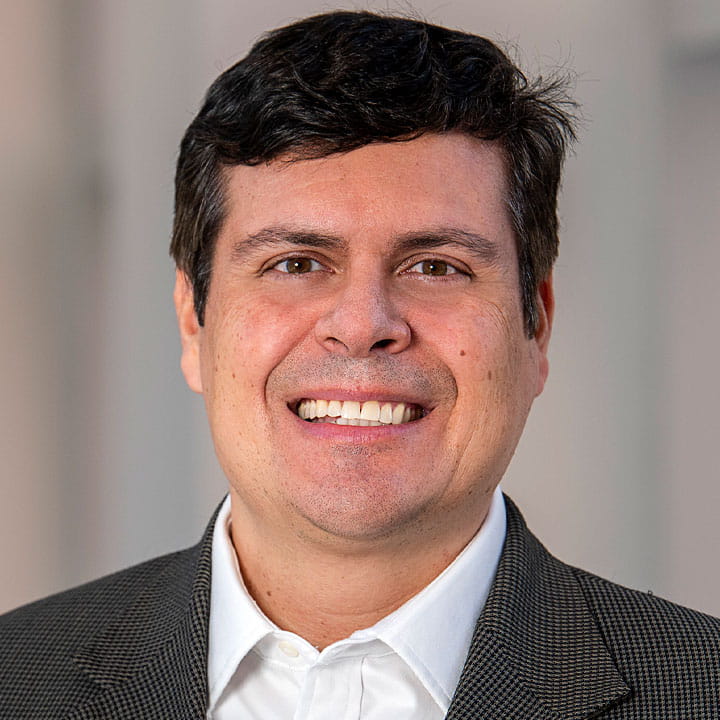
Rudolf Bond
· Assistant Professor of Family and Community MedicineVerifiedOhio State University · Family Medicine
Active 1907–2025
About
Rudolf Bond, MD, is a family medicine physician and assistant professor at Ohio State University Wexner Medical Center. He graduated from the Ohio State University College of Medicine and completed his residency in Family Medicine at MetroHealth Medical Center in Cleveland. Dr. Bond is certified by the American Board of Family Medicine and has a broad clinical practice treating a wide range of conditions in both children and adults. His particular interests include the management of diabetes, osteoarthritis, asthma, and COPD. As a native Spanish speaker, he emphasizes individualized, compassionate care, focusing on listening to his patients and meeting them where they are. Dr. Bond is committed to working with a diverse patient population, teaching residents and medical students, and practicing at the leading edge of medicine. Outside of his clinical work, he enjoys spending time with his family and watching OSU football.
Research topics
- Political Science
- Law
- Psychology
- Sociology
- Economics
- Social psychology
- Positive economics
- Art history
- Public relations
- Art
- Public economics
- Gerontology
- Demography
- Immunology
- Medicine
- Internal medicine
Selected publications
COVID on Trees and Infinite Grids
The PUMP Journal of Undergraduate Research · 2025-05-10
articleOpen accessWe use Hartnell's model for virus spread on a graph, also known as firefighting. For rooted trees, we propose an Unburning Algorithm, a type of greedy algorithm starting from the leaves and working back towards the root. We show that the algorithm saves at least half the vertices of the optimal solution and that this is bound is sharp. We confirm a conjecture of Hartke about integrality gaps when comparing linear and integer program solutions. For general graphs, we propose a Containment Protocol, which looks ahead two time steps to decide where to place vaccinations. We show that the protocol performs near optimally on four well-studied infinite grids. The protocol is available for any graph and we realize this flexibility by investigating an infinite pentagonal graph.
Political Communication · 2025-07-22
articleCOVID on trees and infinite grids
arXiv (Cornell University) · 2024-09-22
preprintOpen accessWe use Hartnell's model for virus spread on a graph, also known as firefighting. For rooted trees, we propose an Unburning Algorithm, a type of greedy algorithm starting from the leaves and working back towards the root. We show that the algorithm saves at least half the vertices of the optimal solution and that this is bound is sharp. We confirm a conjecture of Hartke about integrality gaps when comparing linear and integer program solutions. For general graphs, we propose a Containment Protocol, which looks ahead two time steps to decide where to place vaccinations. We show that the protocol performs near optimally on four well-studied infinite grids. The protocol is available for any graph and we realize this flexibility by investigating an infinite pentagonal graph.
Replication Data for: Engagement with fact-checked posts on Reddit
Harvard Dataverse · 2023-02-14
datasetOpen access1st authorCorrespondingData and code to replicate analyses.
Harvard Dataverse · 2023-03-24
datasetOpen accessReplication data, analysis files, and supporting information for Conservatives' susceptibility to political misperceptions.
Journal of Communication · 2023-04-19 · 5 citations
articleAbstract Numerous studies have shown that individuals’ belief sensitivity—their ability to discriminate between true and false political statements—varies according to psychological and demographic characteristics. We argue that sensitivity also varies with the political and social communication contexts in which they live. Both battleground state status of the state in which individuals live and the level of partisan segregation in a state are associated with Americans’ belief sensitivity. We leverage panel data collected from two samples of Americans, one collected in the first half of 2019 and the other during the 2020 U.S. presidential campaign season. Results indicate that the relationship between living in battleground states and belief sensitivity is contingent on political ideology: living in battleground states, versus in Democratic-leaning states, is associated with lower belief sensitivity among conservatives and higher belief sensitivity among liberals. Moreover, living in a less politically segregated state is associated with greater belief sensitivity. These relationships were only in evidence in the election year.
Bursts of contemporaneous publication among high- and low-credibility online information providers
New Media & Society · 2023-07-31 · 4 citations
articleIn studies of misinformation, the distinction between high- and low-credibility publishers is fundamental. However, there is much that we do not know about the relationship between the subject matter and timing of content produced by the two types of publishers. By analyzing the content of several million unique articles published over 28 months, we show that high- and low-credibility publishers operate in distinct news ecosystems. Bursts of news coverage generated by the two types of publishers tend to cover different subject matter at different times, even though fluctuations in their overall news production tend to be highly correlated. Regardless of the mechanism, temporally convergent coverage among low-credibility publishers has troubling implications for American news consumers.
Journalists’ networks: Homophily and peering over the shoulder of other journalists
PLoS ONE · 2023-10-18 · 6 citations
articleOpen accessSenior authorCorrespondingSocial media plays an important role in how journalists gather and report news. To understand journalists' professional environment, we examine the networks of journalists on Twitter who cover politics for U.S. newspapers in conjunction with a sample of journalists who completed a survey. By combining both their network data and survey responses, we examine the distribution of journalists' ideology (n = 264) and journalistic values (n = 247); and using the network data, we examine the directional relationships between journalists working at large and small papers (n = 4,661). We find that journalists tend to form connections with those who share similar journalistic values. However, we find little evidence that journalists build professional relationships based on similarity in political ideology. Lastly, journalists at larger media outlets are more likely to be central in journalists' Twitter networks, providing evidence that journalists look to other journalists at larger outlets for direction in news coverage. Our evidence provides unique insights into how social media illuminates journalists' professional environment and how that environment may shape news coverage.
Comparing beliefs in falsehoods based on satiric and non-satiric news
PLoS ONE · 2023-01-19 · 3 citations
articleOpen accessCorrespondingThis article seeks to quantify the extent to which Americans hold beliefs that are consistent with interpreting satiric news literally, and to assess whether factors known to promote misperceptions work differently depending on whether the source of the misperception is satire. We also test the robustness of those factors across a diverse set of real-world falsehoods. The study uses secondary data analysis, relying on data drawn from a 12-wave six-month panel conducted in 2019. Analyses focus on participants' beliefs about 120 falsehoods derived from high-profile political content in circulation before each survey wave, including 48 based on satiric news. A non-trivial number of participants believed claims originating in satire, but it is less than the proportion who believed falsehoods derived from other misleading content. Results also confirm the robustness of established predictors of misperceptions while demonstrating that the associations differ in magnitude between satiric and non-satiric news.
Engagement with fact-checked posts on Reddit
PNAS Nexus · 2023-01-27 · 27 citations
articleOpen access1st authorCorrespondingContested factual claims shared online are of increasing interest to scholars and the public. Characterizing temporal patterns of sharing and engagement with such information, as well as the effect of sharing associated fact-checks, can help us understand the online political news environment more fully. Here, we investigate differential engagement with fact-checked posts shared online via Reddit from 2016 to 2018. The data comprise ∼29,000 conversations, ∼849,000 users, and ∼9.8 million comments. We classified the veracity of the posts being discussed as true, mixed, or false using three fact-checking organizations. Regardless of veracity, fact-checked posts had larger and longer lasting conversations than claims that were not fact-checked. Among those that were fact-checked, posts rated as false were discussed less and for shorter periods of time than claims that were rated as true. We also observe that fact-checks of posts rated as false tend to happen more quickly than fact-checks of posts rated as true. Finally, we observe that thread deletion and removal are systematically related to the presence of a fact-check and the veracity of the fact-check, but when deletion and removal are combined the differences are minimal. Theoretical and practical implications of the findings are discussed.
Frequent coauthors
- 81 shared
Anis Yazidi
OsloMet – Oslo Metropolitan University
- 81 shared
Anuradhaa Subramanian
University of Birmingham
- 81 shared
Pamela C. Cosman
University of California, San Diego
- 81 shared
Pedro Lencastre
OsloMet – Oslo Metropolitan University
- 81 shared
E Shachar
University of California, San Diego
- 81 shared
C Mccausland
The University of Texas at Arlington
- 81 shared
Erica Feldman
University of California, San Diego
- 81 shared
Russell Schachar
Hospital for Sick Children
Education
- 2013
PhD, Political Science
University of California, San Diego
- 2007
Master of Arts, Political Science
Arizona State University
- 2006
Bachelor of Arts, Political Science
Arizona State University
- Resume-aware match score
- Save to shortlist
- AI-drafted outreach
See your match with Rudolf Bond
PhdFit ranks faculty by your research interests, methods, and publications — grounded in their actual work, not templates.
- Free to start
- No credit card
- 30-second signup