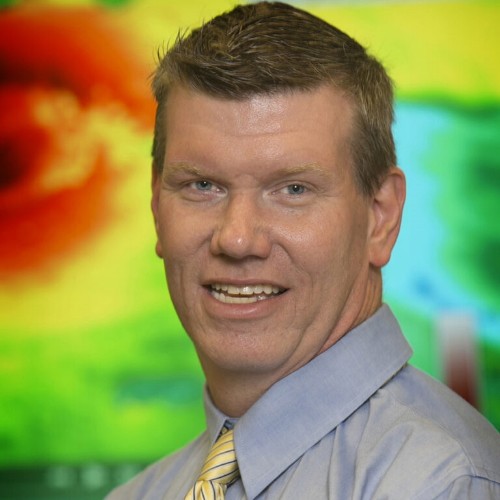
Brian Colle
· ProfessorVerifiedStony Brook University · Sustainability Studies
Active 1995–2026
About
Brian Colle is a professor in the Office of the Dean SOMAS Atmospheric Sciences at Stony Brook University. His research focuses on improving the understanding and forecasting of extreme weather in the coastal margins of North America. He investigates severe convective storms, extratropical and tropical storms, low-level jets and sea breezes, precipitation bands and microphysics, orographic flows, and heavy precipitation using conventional data, field observations, and numerical models such as the Weather Research and Forecasting (WRF) model. His work also involves nesting the WRF within global climate models to understand potential changes in extreme weather during the next century. Additionally, he utilizes high-resolution atmosphere and ocean models for storm surge, fire weather, and offshore wind power resource assessments and forecasting. Colle is actively involved in research projects funded by agencies such as the USDA Forest Service, the National Science Foundation, and the National Oceanic and Atmospheric Administration, among others. His contributions include numerous publications on topics like extratropical cyclones, precipitation structures, and climate trends related to extreme weather events.
Research topics
- Computer Science
- Geography
- Meteorology
- Climatology
- Geology
- Environmental science
- Political Science
- Atmospheric sciences
- Social psychology
- Public relations
- Psychology
Selected publications
Monthly Weather Review · 2026-03-30
articleAbstract A Ka-Band Scanning Polarimetric Radar (KASPR) at Stony Brook University on Long Island, New York (NY), is used to investigate shear and turbulent layers in winter precipitation events, which are often revealed as Doppler spectrum width (SW) layers (SWLs). This study provides the first climatology of SWLs in winter precipitation events from 2017 to 2021 by documenting their spatial and kinematic characteristics. Three events are presented to introduce these structures in different winter precipitation environments. A percentile-based detection algorithm was developed to automatically identify SWLs in plan position indicator (PPI) scans, and a velocity–azimuth display (VAD) technique is applied to decompose the flow into resolved and unresolved components, from which proxies for shear and turbulence are derived. A binary operator is used to conjoin SW enhancements exceeding the 75th percentile into individual SWLs. The algorithm identified 77 955 SWLs in KASPR PPI scans over four winter seasons. Most SWLs are thin (<200 m) and occur preferentially between 0.6 and 0.9 of cloud depth. SWL magnitudes are generally weak but occasionally exceed 3 m s −1 , and azimuthal spans are typically narrow (<90°). Resolved shear is most closely associated with SWLs, while unresolved velocity (turbulence proxy) is not preferentially concentrated within SWLs. However, when a shear-organized SWL is present, unresolved velocity exerts the primary control on its thickness and magnitude, with resolved shear playing a secondary role. Given the ubiquitous nature of these SWLs, they may be important features for understanding subkilometer-scale dynamic processes in winter precipitation. Significance Statement This study presents the first climatology of Doppler spectrum width layers (SWLs) within northeast U.S. winter precipitation events using high-resolution Ka-band radar data. A percentile-based detection algorithm identified over 77 000 SWLs, allowing documentation of their spatial and kinematic characteristics. SWLs are found to be predominantly thin and weak features that occur most often in the mid–upper portions of clouds. Their thickness and magnitude are primarily driven by turbulence, with shear exerting a secondary influence. These results enhance our understanding of fine-scale dynamical processes in winter precipitation.
UNC Libraries · 2026-04-15
articleOpen accessThis article introduces a new integrated scenario-based evacuation (ISE) framework to support hurricane evacuation decision making. It explicitly captures the dynamics, uncertainty, and human-natural system interactions that are fundamental to the challenge of hurricane evacuation, but have not been fully captured in previous formal evacuation models. The hazard is represented with an ensemble of probabilistic scenarios, population behavior with a dynamic decision model, and traffic with a dynamic user equilibrium model. The components are integrated in a multistage stochastic programming model that minimizes risk and travel times to provide a tree of evacuation order recommendations and an evaluation of the risk and travel time performance for that solution. The ISE framework recommendations offer an advance in the state of the art because they: (1) are based on an integrated hazard assessment (designed to ultimately include inland flooding), (2) explicitly balance the sometimes competing objectives of minimizing risk and minimizing travel time, (3) offer a well-hedged solution that is robust under the range of ways the hurricane might evolve, and (4) leverage the substantial value of increasing information (or decreasing degree of uncertainty) over the course of a hurricane event. A case study for Hurricane Isabel (2003) in eastern North Carolina is presented to demonstrate how the framework is applied, the type of results it can provide, and how it compares to available methods of a single scenario deterministic analysis and a two-stage stochastic program.
Environmental Research Communications · 2025-03-28 · 3 citations
articleOpen accessSenior authorAbstract Canada experienced its most severe wildfire season on record in 2023, with nearly 5% of its forested land burned-almost four times the previous record set in 1995. Our analysis indicated that fire severity, strongly correlated with the monthly Fire Weather Index (FWI), was most intense in the western provinces and territories during May and July, whereas in the eastern provinces, it peaked in June, leading to a seasonal and areal average of more than 3.5 standard deviations (STD). This unprecedented fire activity was fueled by record-breaking, persistent high-pressure systems, with both their frequency and intensities surpassing 3 STD, along with variable winds. These abnormal atmospheric patterns exacerbated dry conditions, reduced cloud cover, and increased surface solar radiation, driving record-high temperatures and FWI values, all exceeding ±3 STD. The extreme high-pressure events were primarily linked to a combination of climatological standing waves and exceptionally strong, transient quasi-stationary waves. The dominant patterns in the mid-troposphere were characterized by large-scale planetary waves at low zonal wavenumbers (1–4). Long-term warming trends also contributed, though they played a lesser role, accounting for roughly 10–20% of the overall anomalies. These findings provide critical insights into the atmospheric dynamics driving Canada’s unprecedented wildfire season.
Weather Climate and Society · 2025-09-08
articleAbstract Disasters such as storm surge flooding pose an escalating threat to vulnerable coastal communities. While advances in weather models and forecasts are essential for informing protective actions, improving communication with the public for heightened storm preparedness is equally important. In this report, we provide a quantitative evaluation of lessons learned in an online workshop involving over 150 college students. The workshop employed simulated visuals of flooding and role-playing scenarios about a fictitious college campus. In addition, we used an “ethical matrix” (EM) tool to enable stakeholders to systematically represent, discuss, understand, and weigh trade-offs and perspectives pertaining to potential impacts of anticipated flooding from an impending hurricane. Building on a previous summary of the workshop (Colle et al.), this report presents quantitative and qualitative results from hypotheses about the workshop’s effects on feelings of worry, intent to take protective action, and increased awareness of others’ situations and concerns. These findings provide insights for refining hypotheses and designs for workshops with communities vulnerable to storm surge flooding. Significance Statement Traditionally, flood warnings rely on forecasts, storm path diagrams, and evacuation orders. Additional communication strategies are needed to help people grasp individual and communal impacts. This paper presents quantitative evidence that communication strategies that help people “feel” the likely impact of flooding not only on themselves but also on those around them are associated with intent to protect oneself and others, including vulnerable populations. We also provide a toolkit of supplemental material for replicating some or all of the approaches tested.
Weather and Forecasting · 2025-05-26 · 3 citations
articleOpen accessSenior authorAbstract Low-level winds from two numerical weather prediction (NWP) model analyses are evaluated offshore at two floating lidars over the New York Bight (NYB) region. These analyses are often used to evaluate models and for offshore wind resource assessments, so it is important to understand the errors and the environmental conditions and flow patterns associated with these errors. Lidar winds in the lowest 20–200 m MSL are used to validate the fifth major global reanalysis produced by the European Centre for Medium-Range Weather Forecasts (ECMWF) (ERA5) and the National Renewable Energy Laboratory’s 2023 National Offshore Wind (NOW-23) wind product. Validation is performed for different seasons, months, and times of day, as well as different marine atmospheric boundary layer (MABL) stabilities and for large wind speed error events during the warm season. Both the ERA5 and NOW-23 struggle to accurately predict the lower MABL winds (i.e., speed and speed shear), especially during the warm season, and they significantly differ in the sign of and temporal nature of wind speed errors. MABL stability and model depiction of MABL mixing are one of the most important factors influencing the magnitude and sign of wind errors. Stable MABLs are associated with significantly large model analysis underestimations in wind speed and vertical shear. ERA5 and NOW-23 tend to perform better under near-neutral to unstable conditions, but ERA5 can overestimate winds under these conditions. This work has implications for future offshore wind energy assessment and marine forecasting in the NYB. Significance Statement This work quantifies the wind speed errors for two different weather model analyses in the lowest 200 m MSL offshore in the New York Bight (NYB) and improves our understanding of the environmental conditions and flow patterns associated with these errors. This work has implications for future offshore wind energy assessment and forecasting in the NYB. Our findings demonstrate that model analyses struggle in accurately depicting the wind speed resource characteristics, especially in the warm season months. The vertical temperature profile and mixing in the MABL are important factors influencing the magnitude and sign of wind errors.
Weather and Forecasting · 2025-07-21
articleSenior authorAbstract This study compares the 5-day tropical cyclone (TC) track forecasts from the Global Ensemble Forecast System (GEFS) with a machine learning approach applied to this ensemble. A convolutional neural network (CNN) model was developed using northern Atlantic TC training data from 2008 to 2022, while an independent set of storms was used to evaluate the CNN model. The CNN for tropical cyclone track forecasting was trained using fivefold cross validation on a shuffled dataset split into 90% training/validation and 10% evaluation. PyTorch was used to develop a CNN model with a custom loss function, and performance was assessed using the haversine function and error metrics, comparing the CNN’s TC track forecasts to GEFS mean track forecasts. The CNN has a 58%–86% better track prediction against GEFS mean for forecast hours 0–96, which decreases to 35%–53% for hours 108–120. Track differences between those cases that the CNN improved the forecast versus did not improve are also explored, which shows that most of the CNN improvement is from a decrease in the along-track error (ATE). This is consistent with past studies of this ensemble, which showed that the largest bias exists in the along-track direction. Significance Statement This research focuses on enhancing the accuracy of tropical cyclone track forecasts by leveraging a convolutional neural network (CNN). Traditional forecasting models have relatively large errors in predicting the track of tropical cyclones, especially at forecast lead times of 3–5 days. These errors can result in inadequate warnings and misallocation of resources during storm preparations, potentially endangering lives and property. Our CNN model addresses these issues by correcting systematic biases, resulting in more accurate forecasts.
The Impact of Potential Vorticity Dipoles on the Life Cycle of Snow Multibands
Journal of the Atmospheric Sciences · 2025-05-07 · 2 citations
articleOpen accessSenior authorAbstract The life cycle of multibanded precipitation structures is closely examined using an idealized baroclinic wave simulation down to 4-km grid spacing. The model develops a wedge-shaped region of multibanded precipitation east of the near-surface low center within a region of 700–500-hPa potential instability and 600–500-hPa southwesterly vertical wind shear. Cells that develop near the southern tip of the wedge elongate into southwest–northeast-oriented bands as they move northward with the mean flow and then dissipate several hours later as they move further northward within the cyclone comma head. Using a band-following framework and a potential vorticity (PV) budget, the processes resulting in band genesis, growth, and decay are investigated. First, the cell’s moist updraft from below 600 hPa redistributes the horizontal vorticity within the 600–500-hPa layer into the vertical, which combined with latent heat release results in a horizontal PV dipole around the cell. This PV is advected northeastward at midlevels, causing the dipole to extend from the cell. Flow perturbations between the two PV anomalies result in 600–500-hPa divergence northeast of the cell and an elongated region of upward motion and the genesis of the precipitation band. The PV dipole and band continue to intensify primarily from latent heating. As the band moves northward away from the 700–500-hPa potential instability, diffusion and turbulent mixing weaken the PV dipole and the circulations maintaining the band. As the updraft subsequently weakens, snow fallout persists for about 1–2 h before the band fully dissipates. Significance Statement Multibanded precipitation structures are difficult to predict and can greatly affect snowfall accumulations. The small-scale (20–40 km) nature of these features makes them difficult to sample with observations, thereby impacting how accurately they are conveyed at the start of model forecasts. This study investigates the mechanisms that cause snowbands to grow and decay in a numerical weather model. The initial updraft of the developing band creates circulations that perturb the ambient flow aloft, which in turn induces additional updrafts that cause the band to develop. After several hours, the band dissipates as processes related to turbulent mixing disrupt these circulations.
A Climatology of Cool-Season Precipitation Objects in the Comma Head of an Extratropical Cyclone
Monthly Weather Review · 2025-04-30
articleOpen accessSenior authorAbstract Extratropical cyclones have precipitation structures within the comma head ranging from cells to banded precipitation. Much of the previous research in the comma head has focused on the larger primary (single) snowbands, with little investigation of the broader spectrum of snowband structures. An updated precipitation band climatology within the cyclone comma head is necessary to understand the variety of structures that exist, which will help with model validation and field study investigations. Composite radar over the Northeast U.S. and adjacent coastal waters from 1996–2023 is used to quantify the distribution of precipitation objects in terms of length, aspect ratio, and area in a cyclone relative framework. Additionally, cyclone cases were further separated by both track orientation and by deepening rate. There is a broad distribution of precipitation objects sizes, thus no clear separation between primary and multibands defined in previous studies. Band-like objects most frequently occur north and northwest of the surface cyclone center, while more cellular objects are favored east and south of the center. Larger structures and more band-like objects are more common in rapidly deepening cyclones, and these structures tend to be oriented in a southwest-to-northeast direction. Storms with a more west-to-east track favor band-like objects to the north-northeast and oriented in a west-to-east direction. Using the results from this climatology a new conceptual model of precipitation objects in the cyclone comma head is presented.
Journal of Atmospheric and Oceanic Technology · 2025-03-05 · 1 citations
articleOpen accessSenior authorAbstract Automated feature identification of storm structures is a useful tool for model validation and understanding the environment around the feature. Past studies have used automated identification to investigate precipitation bands within the comma head of extratropical cyclones, but the different algorithms have not been compared. This paper compares the past approaches and introduces a new adaptive feature identification algorithm to obtain a range of structures from precipitation cells to bands. Previous studies generally use a single threshold of base reflectivity over a large region or some other variable to isolate objects, while our algorithm applies a threshold to localized regions within the domain of interest, treating the precipitation objects as locally enhanced features. The new algorithm is first tested on a set of synthetically generated reflectivity fields with varying complexity and then evaluated for a few observed winter storm events in the northeast United States. While there is some sensitivity to the size of the localized region, this issue can be alleviated by doing multiple permutations of the box size and taking the union of the resulting objects. Image morphology can be used to further separate identified objects. When the new algorithm is compared to algorithms using single thresholds, there is improved detection of low-intensity objects and separation of high-intensity objects, advantages which are particularly relevant for identifying snow and rainbands within winter storms. Significance Statement Snowstorms often contain band-like structures featuring enhanced snowfall, which yield a variety of societal impacts. Precipitation structures in winter storms have a variety of shapes and durations, but the range of structures is not well understood. Manually identifying these structures by looking at radar images is one method, but this is time consuming and subjective. Some past approaches used to automatically identify precipitation structures have limitations. This study compares past methods and introduces a new method that can be applied to better understand the precipitation structures around a cyclone, focusing on storms in the northeast United States.
International Journal of Disaster Risk Reduction · 2024-11-01 · 13 citations
article
Recent grants
NSF · $205k · 2003–2007
NSF · $350k · 2014–2019
Collaborative Research: Intermittent and Steady State Processes in Orographic Precipitation
NSF · $297k · 2009–2013
NSF · $261k · 2005–2009
NSF · $226k · 2007–2011
Frequent coauthors
- 102 shared
Bradley F. Smull
University of Washington
- 93 shared
Clifford F. Mass
University of Washington
- 86 shared
Nicholas A. Bond
- 75 shared
Nathaniel S. Winstead
Johns Hopkins University Applied Physics Laboratory
- 73 shared
Robert A. Houze
University of Washington
- 73 shared
Bradley R. Colman
- 66 shared
Mark T. Stoelinga
Vaisala (United States)
- 66 shared
Peter V. Hobbs
Education
Ph.D.
Stony Brook University
- Resume-aware match score
- Save to shortlist
- AI-drafted outreach
See your match with Brian Colle
PhdFit ranks faculty by your research interests, methods, and publications — grounded in their actual work, not templates.
- Free to start
- No credit card
- 30-second signup