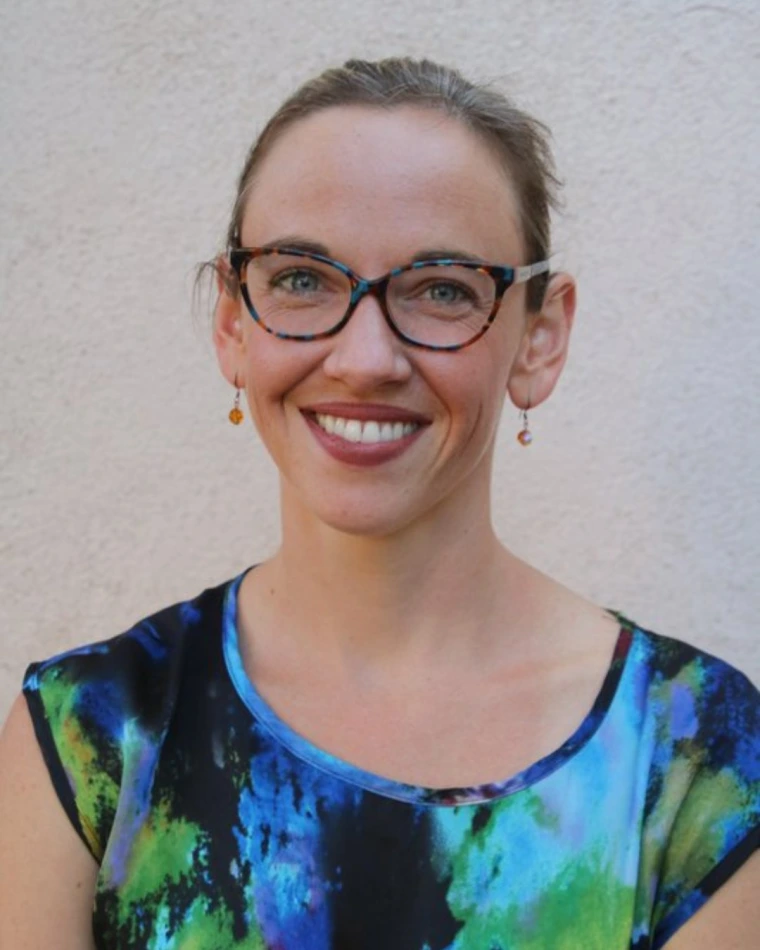
Robin C. Reineke
· Associate Professor, Anthropology Associate Research Social Scientist, Southwest Center Accepting Graduate StudentsVerifiedUniversity of Arizona · Anthropology
Active 2010–2024
About
Robin C. Reineke is an associate professor in the School of Anthropology and an associate research social scientist at the Southwest Center at the University of Arizona. She is a sociocultural anthropologist whose research explores social and political responses to deaths and disappearances, with a particular focus on forensic responses. Reineke has conducted ethnographic research and forensic anthropological practice in the US-Mexico borderlands for over fifteen years, notably working with the Pima County Office of the Medical Examiner from 2006 to 2020 to address issues related to unidentified human remains and missing persons in the border region. She co-founded and directed the nonprofit organization Colibrí Center for Human Rights from 2013 to 2019, which aims to address migrant deaths and disappearances. Currently, she is working on her first book, titled 'With the Dead, For the Living: Forensic Care in the US-Mexico Borderlands,' an ethnography about forensic human identification in southern Arizona. Additionally, Reineke collaborates on a binational research project called 'Forensic Citizenship in the Borderlands,' which investigates civilian forensic expertise and practices on both sides of the Arizona-Sonora border. Her work emphasizes understanding structural vulnerabilities, forensic practices, and the social implications of death and disappearance in border communities.
Research topics
- Sociology
- Political Science
- Demography
- Geography
- Medicine
- Philosophy
- Epistemology
- Gender studies
- Psychology
- Law
- Psychotherapist
- Criminology
- Gerontology
Selected publications
Excessive Use of Force and Migrant Death and Disappearance in Southern Arizona
Journal on Migration and Human Security · 2024-09-01 · 5 citations
article1st authorCorrespondingExecutive Summary In this article, we present a qualitative analysis of the events surrounding death or disappearance in autopsy and missing person reports from the Pima County Office of the Medical Examiner (PCOME) in Arizona to highlight how interactions between border enforcement personnel and migrants can be deadly. We reviewed PCOME records of undocumented border crosser deaths between 2000 and 2023 and observed three main types of deadly U.S. Border Patrol (USBP) practices: reckless motor vehicle pursuits, aggressive strategies used to detain individuals who are on foot, and the use of lethal force. Our findings reveal that these tactics, which we argue constitute forms of “excessive use of force,” represent significant yet overlooked factors contributing to migrant death and disappearance in southern Arizona. We make the following policy recommendations: 1. Immediate measures to prevent the loss of life (A). The Department of Homeland Security (DHS) should mandate a ban on border enforcement methods that provoke fear, panic, or confusion. (B). DHS should take measures to substantially reduce the use of high-speed motor vehicle pursuits by USBP and other immigration enforcement officials. (C). DHS should ensure that USBP officers are compliant with Department of Justice (DOJ) standards on use of deadly force, in particular the policy that “Deadly force may not be used solely to prevent the escape of a fleeing suspect.” 2. Investigate Border Fatalities Involving Border Enforcement Officers (A). We call on the Government Accountability Office (GAO) to conduct an official review of all medical examiner and coroner records along the U.S.-Mexico border for fatality cases in which border enforcement personnel were involved in any way in the circumstances surrounding death. (B). We encourage the formation of civilian review boards in border regions to review medical examiner and coroner records of migrant fatalities involving immigration officials as well as immigration officials’ apprehension strategies immediately preceding fatal encounters with migrants.
Migration, Death, and Disappearance: Education and Engagement in Tucson, Arizona
Political pedagogies · 2023-01-01
book-chapterOpen accessSenior authorAbstract A tragedy has unfolded over the past two decades along the U.S.-Mexico border, where the remains of at least 9000 human beings have been discovered in the desert borderlands since 2000. While migration itself is not a crisis, the loss of life most certainly is. In addition to those who mourn the dead are those who experience the painful ambiguity of loved ones’ disappearance. The scale of death and disappearance is vast, both spatially and temporally—the geography is not limited to the U.S.-Mexico borderlands, but also includes the south-to-north migration corridor from Central America to the U.S., where losses have occurred gradually and continually since the early 2000s. Within communities where migration is prevalent, everyone knows of someone who has disappeared en route . Sadly, this loss of life will likely continue until Latin American peoples are able to immigrate to the U.S. safely and legally. In the meantime, it is important for students to learn about this issue, understand its root causes, and work on solutions.
Towards a forensic anthropology of structural vulnerability
Forensic Science International Synergy · 2023-01-01 · 7 citations
articleOpen access1st authorCorrespondingAnthropologists have theorized structural vulnerability as a way to understand forms of violence that disenfranchise certain parts of a population, leading to poorer health outcomes and increased risk of death. Recently, forensic anthropologists have used these theories to better understand the ways in which individual decedents in forensic contexts may be linked collectively through structural conditions. A recent example is the proposal of a "structural vulnerability profile." Based on research and casework done in the context of migrant deaths along the US-Mexico border, we caution against the use of a "profile," which suggests a categorical approach that could lead to negative unintended consequences in the future. Instead, we argue for continued development of practices that allow for observation, documentation, and interdisciplinary discussion of evidence of structural violence revealed during a death investigation. Specifically, we argue for an approach that grounds such observations within a particular social and historical context.
Forensic citizenship among families of missing migrants along the U.S.-Mexico border
Citizenship Studies · 2022-01-02 · 16 citations
articleOpen access1st authorCorrespondingSince the mid-1990s, US federal policy has funneled unauthorized migration through remote portions of the Sonoran Desert, resulting in thousands of deaths and disappearances. Research about the work to find, care for, and identify those who have died at international borders largely focuses on forensic authorities or humanitarian volunteers. Often left out of such analyses are the families of the missing and dead, who I argue are some of the most critical actors in this work. Drawing on fieldwork done between 2006 and 2021, in this article I discuss how families of missing migrants impact forensic procedures on the US-Mexico border. They do this by learning forensic skills and developing relationships with state forensic authorities. I argue that families of missing migrants are engaged in forms of active citizenship that build relationships of care and obligation among themselves, state forensic authorities, and the missing and dead.
Natural deaths in extraordinary times
Human Remains and Violence An Interdisciplinary Journal · 2022-04-01 · 1 citations
articleOpen access1st authorCorrespondingResearch into the governance of dead bodies, primarily focused on post-conflict contexts, has often focused on the aspects of the management of dead bodies that involve routinisation, bureaucratisation and order. Less attention has been paid to the governance of the dead in times of relative peace and, in particular, to the aspects of such work that are less bureaucratised and controlled. This article explores the governance of dead bodies in pandemic times – times which although extraordinary, put stress on ordinary systems in ways that are revealing of power and politics. Observations for this article come from over fifteen years of ethnographic research at a medical examiner’s office in Arizona, along with ten focused interviews in 2020 with medico-legal authorities and funeral directors specifically about the COVID-19 pandemic. The author argues that the pandemic revealed the ways in which the deathcare industry in the United States is an unregulated, decentralised and ambiguous space.
SSRN Electronic Journal · 2021 · 32 citations
- Political Science
- Political Science
- Geography
Thousands of undocumented border crossers have died while attempting to cross the US-Mexico border since the 1990s. Prior studies have found that these deaths are a consequence of increased border enforcement efforts as well as of economic, political, and social conditions in immigrant-sending countries and in the United States. The present study contributes to this expanding body of literature. Drawing on data from the Pima County Office of the Medical Examiner (PCOME), we provide information on the recovery of human remains either known or believed to be of undocumented border crossers in southern Arizona between FY 1990 and 2020. We find that during this period the remains of at least 3,356 undocumented border crossers were recovered in the region, with the majority being found since 2005. US Border Patrol apprehensions, which immigration scholars often use as proxy for undocumented migration trends, have decreased in that agency’s Tucson Sector since the mid-2000s. However, the rate of recovered remains of undocumented border crossers has largely increased even as apprehensions have declined, which is a dynamic that suggests undocumented migration in southern Arizona has become increasingly dangerous. We also find that the remains of undocumented border crossers were increasingly recovered from more remote areas of southern Arizona over time, which further supports this assertion. The PCOME records we examined over our study period suggest that migrants who have died in southern Arizona are largely male (84%), and, among identified decedents, 20-49 years of age (82%) and from Mexico (80%). Most perished due to exposure (38%) or an undetermined cause of death (48%), and were successfully identified post-mortem (64%). Nevertheless, as highlighted throughout this report, we find important changes in the breakdown of these factors across time, for which we offer possible explanations. Our hope is that policymakers and the public will consider the data presented in this report, as access to empirical evidence is crucial when formulating public policy and when addressing the root causes of critical social concerns such as border-crosser deaths along the US-Mexico border.
Ambiguous Loss and Embodied Grief Related to Mexican Migrant Disappearances
Medical Anthropology · 2021 · 30 citations
- Sociology
- Sociology
- Gender studies
Since the 1990s, thousands of Latin Americans have died or disappeared along the US-Mexico border, following the funneling of migration through remote desert regions. The families of missing migrants face long-term "ambiguous loss," a lived experience in which a loved one is physically absent but psychologically present. Mexican relatives of the missing in Arizona and Sonora report that these losses produce deep emotional suffering along a timeline - worrying about the crossing, learning of the disappearance, beginning to search, and finally, coping with the long-term impacts of unknowing. Close relatives experience embodied health effects including headaches, insomnia, anxiety, depression, and chronic disease.
Skeletal evidence of structural violence among undocumented migrants from Mexico and Central America
American Journal of Physical Anthropology · 2021 · 32 citations
- Sociology
- Demography
- Geography
OBJECTIVES: We examine the prevalence and sociodemographic risk factors of skeletal indicators of stress in forensic samples of undocumented migrants from Mexico and Central America. MATERIALS AND METHODS: Cranial and dental remains of 319 migrants recovered in the Arizona and Texas borderlands were assessed for porotic hyperostosis (PH), cribra orbitalia (CO), and linear enamel hypoplasias (LEH). Logistic regression models for each condition were estimated to test for associations with biological sex, age, recovery location, and whether individuals were identified. Additional models estimated for a subsample of identified migrants included region of origin, residential context, and community indigeneity. RESULTS: The full sample shows moderate crude prevalence of CO (9.6%) and LEH (34.1%), and a high prevalence of PH (49.6%). Significantly higher odds of PH are associated with being male (2.16 times higher), unidentified (1.89 times higher), and recovered in Arizona (3.76 times higher). Among identified migrants, we fail to find associations significant at the p < 0.05 level between skeletal stress and all sociodemographic variables except age. DISCUSSION: The factors associated with PH may be related to influences on decisions to migrate and diversity among migrant sending regions. The skeletal evidence for early life stress is generally consistent with common public health concerns among impoverished communities in the region. The lesions themselves are viewed as embodied risk of physiological disturbance when resource access is structured by higher-level social, economic, and political forces. Forensic anthropologists would benefit from increased sensitivity to embodied structural violence among the vulnerable individuals and communities they serve.
Immigration Advocates Discuss DNA In A Q & A with <i>Practicing Anthropology</i>
Practicing Anthropology · 2018-09-01
articleSenior authorViews Icon Views Article contents Figures & tables Video Audio Supplementary Data Peer Review Share Icon Share Facebook Twitter LinkedIn MailTo Tools Icon Tools Get Permissions Cite Icon Cite Search Site Citation Mirza Monterroso, Arturo Magaña, Robin Reineke; Immigration Advocates Discuss DNA In A Q & A with Practicing Anthropology. Practicing Anthropology 1 September 2018; 40 (4): 26–29. doi: https://doi.org/10.17730/0888-4552.40.4.26 Download citation file: Ris (Zotero) Reference Manager EasyBib Bookends Mendeley Papers EndNote RefWorks BibTex toolbar search Search Dropdown Menu toolbar search search input Search input auto suggest Search
Temporal Patterns of Mexican Migrant Genetic Ancestry: Implications for Identification
American Anthropologist · 2017-05-02 · 32 citations
articleCorrespondingMotivated by the humanitarian crisis along the US–Mexico border and the need for more integrative approaches to migrant death investigations, we employ both biological and cultural anthropology perspectives to provide insight into these deaths and the forensic identification process. We propose that structural vulnerabilities linked to ethnicity impact the success of identifying deceased migrants. Using forensic genetic data, we examine the relationships among identification status, case year, and ancestry, demonstrating how Native American and European ancestry proportions differ between identified and unidentified migrant fatalities, revealing an otherwise unrecognized identification bias. We find that Mexican migrants with more European ancestry are more often successfully identified in recent years. We attribute this bias in identification to the layers of structural vulnerability that uniquely affect indigenous Mexican migrants. By demonstrating the impact that social processes like structural violence can have on the relative success of forensic casework along the US–Mexico border, our work underscores the fact that forensic casework is itself a social process. Research undertaken with the intent to improve forensic identification protocols should consider social context, a factor that could significantly impact identification rates. This study shows the need for collaboration between forensic practitioners and those working closely with affected communities. [US–Mexico border, forensic anthropology, migration, admixture, DNA] Motivados por la crisis humanitaria a lo largo de la frontera entre México y Estados Unidos y la necesidad de aproximaciones más integrales para las investigaciones de las muertes de migrantes, empleamos tanto perspectivas de la antropología biológica como de la cultural para entender estas muertes y el proceso forense de identificación. Proponemos que las vulnerabilidades estructurales conectadas con la etnicidad impactan el éxito para identificar los migrantes fallecidos. Usando información forense genética, examinamos las relaciones entre el estado de identificación, el año del caso, y la ascendencia, y se muestra cómo las proporciones de ascendencia nativo americana y europea difieren entre los migrantes fallecidos identificados y no identificados, revelando de otra parte sesgos de identificación no reconocidos. Encontramos que los migrantes mejicanos con mayor ascendencia europea son más a menudo exitosamente identificados en años recientes. Atribuimos este sesgo en la identificación, a las capas de vulnerabilidad estructural que únicamente afectan a los migrantes mejicanos indígenas. Demostrando el impacto que los procesos sociales, como la violencia estructural pueden tener en el relativo éxito del estudio forense de antecedentes individuales a lo largo de la frontera entre Estados Unidos y México, nuestro trabajo enfatiza el hecho que el estudio forense de antecedentes individuales es en sí mismo un proceso social. La investigación emprendida con el propósito de mejorar los protocolos de identificación forense debe considerar el contexto social, un factor que podría impactar significativamente las tasas de identificación. Este estudio muestra la necesidad de colaboración entre profesionales forenses y aquellos trabajando estrechamente con las comunidades afectadas. [frontera entre México y Estados Unidos, antropología forense, migración, mezcla étnica, ADN] Please note: The publisher is not responsible for the content or functionality of any supporting information supplied by the authors. Any queries (other than missing content) should be directed to the corresponding author for the article.
Frequent coauthors
- 8 shared
Daniel E. Martínez
University of Arizona
- 5 shared
B. E. Anderson
Langley Research Center
- 4 shared
Raquel Rubio-Goldsmith
International Organization for Migration
- 4 shared
Angela Soler
Office of Chief Medical Examiner
- 4 shared
Bruce Parks
University of Arizona
- 4 shared
Jared Beatrice
College of New Jersey
- 2 shared
Gregory P. Hess
NYU Langone Health
- 1 shared
Gabriella Soto
Arizona State University
Education
PhD, School of Anthropology
University of Arizona
Masters Degree, School of Anthropology
University of Arizona
Bachelor of Arts, Anthropology
Bryn Mawr College
- Resume-aware match score
- Save to shortlist
- AI-drafted outreach
See your match with Robin C. Reineke
PhdFit ranks faculty by your research interests, methods, and publications — grounded in their actual work, not templates.
- Free to start
- No credit card
- 30-second signup