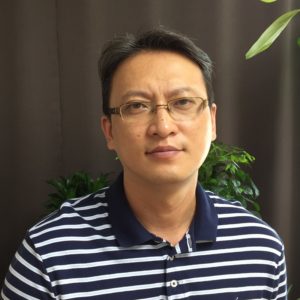
Seong Uk Kim
· Cho Associate Professor in Korean Culture and ReligionVerifiedColumbia University · East Asian Languages and Cultures
Active 1983–2025
About
Seong Uk Kim is an Associate Professor of Korean Culture and Religion at Columbia University, affiliated with the Department of East Asian Languages and Cultures. He holds a PhD from the University of California, Los Angeles, earned in 2013. His research interests focus on Korean Buddhism and Religions, as well as East Asian Buddhism and Religions. His scholarly work examines the intersections between Buddhism and other religions in pre-modern Korea, with particular attention to the relationships between Buddhist monastics and Confucian elites during the late Chosŏn period from the 17th to 19th centuries. His first book, Monks and Literati, explores these relationships and attitudes toward Buddhism in that era. Currently, he is researching the development of self-identifying Sŏn Buddhist communities of the same period to reconstruct the social, cultural, and religious history of the Korean Sŏn tradition. Prior to his appointment at Columbia, he worked as a postdoctoral fellow at Washington University in St. Louis and Harvard University, where he taught courses on Buddhist traditions, Korean religions, and methods in the study of religion.
Research topics
- Environmental science
- Environmental chemistry
- Biology
- Ecology
- Chemistry
- Waste management
- Engineering
- Biochemistry
- Environmental engineering
- Materials science
- Metallurgy
- Pulp and paper industry
Selected publications
Journal of Environmental Management · 2025-01-29 · 1 citations
articleIOP Conference Series Earth and Environmental Science · 2025-05-01 · 1 citations
articleOpen accessAbstract Circular economy is a promising future across various sectors to solve environmental issues such as global climate change by recovering and recycling the resources. In the globe, various industrial sectors are highly dependent on the fossil fuel-based electricity generation causing global warning potential. In this context, hydrogen utilization is highlighted to substitute fossil >ired energy resources. However, hydrogen production has relied on as byproduct from petrochemical industry; this grey hydrogen production emitted anthropogenic greenhouse gases (GHGs) such as carbon dioxide (CO 2 ). Hydrogen delivery is additionally problematic issue due to large volume of hydrogen gas. In this context, methanol and ammonia are promising hydrogen carrier to accelerate hydrogen delivery and utilization; they face problems of 1) non-greener process to produce ammonia and 2) insuf>icient biomass to produce methanol. Wastewater treatment plant (WWTP) treat mainly organic pollutants, and it can recover energy from treated organic pollutants. Furthermore, anaerobic digestion (AD) in WWTP provides abundant biogas including CO 2 and CH 4 . The biogas from AD can be reformed to produce methanol and hydrogen; furthermore, reject water from AD includes strengthened ammonium and it can be stripped and converted to ammonia. This study aims to conduct comparative analyses to identify the implementable pathways towards circular economy among wastewater to hydrogen, ammonia, and methanol. This study uses techno-economic assessment (TEA) and life-cycle assessment (LCA) for hydrogen, ammonia, and methanol recovery from WWTP. Considering technology readiness levels, diverse methods for hydrogen, ammonia, and methanol recovery such as steam methane reforming (SMR), biogas upgradation system, and stripper were considered. This research indicates H 2 , NH 3 , and MeOH production from wastewater can reduce the production cost of 28.5%, 38.3%, and 18.6% than conventional production methods, with acceptable GHGs emission.
2025-06-10 · 4 citations
article1st authorCorrespondingConventional methods for PAN-sharpening often struggle to restore fine details due to limitations in leveraging high-frequency information. Moreover, diffusion-based approaches lack sufficient conditioning to fully utilize Panchromatic (PAN) images and low-resolution multi-spectral (LRMS) inputs effectively. To address these challenges, we propose an uncertainty-aware knowledge distillation diffusion framework with details enhancement for PAN-sharpening, called U-Know-DiffPAN. The U-Know-DiffPAN incorporates uncertainty-aware knowledge distillation for effective transfer of feature details from our teacher model to a student one. The teacher model in our U-Know-DiffPAN captures frequency details through freqeuncy selective attention, facilitating accurate reverse process learning. By conditioning the encoder on compact vector representations of PAN and LRMS and the decoder on Wavelet transforms, we enable rich frequency utilization. So, the high-capacity teacher model distills frequency-rich features into a lightweight student model aided by an un certainty map. From this, the teacher model can guide the student model to focus on difficult image regions for PAN-sharpening via the usage of the uncertainty map. Extensive experiments on diverse datasets demonstrate the robustness and superior performance of our U-Know-DiffPAN over very recent state-of-the-art PAN-sharpening methods. The project page is available at https://kaist-viclab.github.io/U-Know-DiffPAN-site/.
International Journal of Hydrogen Energy · 2025-09-22 · 2 citations
articleSenior authorCorrespondingGroundwater for Sustainable Development · 2025-08-23 · 3 citations
articleSenior authorCorrespondingWater Research · 2025-02-23 · 1 citations
articleJournal of Korean Medical Science · 2025-01-01 · 1 citations
articleOpen accessBACKGROUND: Wastewater surveillance (WS) technology has gained significant attention in many countries due to its role in the monitoring of infectious diseases within communities and complementing clinical testing to prevent coronavirus disease 2019 (COVID-19) outbreaks. In 2023, the Korea Disease Control and Prevention Agency (KDCA) launched the Korea Wastewater Surveillance (KOWAS) project in collaboration with 17 cities and provinces to track COVID-19 outbreaks. METHODS: From January to August 2023, the concentrations of the severe acute respiratory syndrome coronavirus 2 (SARS-CoV-2) E gene in wastewater were monitored in 19 institutes of health and environmental research, all within local governments. Influent samples were collected from 62 wastewater treatment plants (WWTPs) and weekly trends in SARS-CoV-2 E gene concentrations in wastewater were compared to those of new COVID-19 cases. RESULTS: During 34 weeks, the concentration of SARS-CoV-2 in wastewater samples closely mirrored the trends in new COVID-19 cases, showing the effectiveness of WS in detecting the presence of the virus. However, the efficacy of the WS method varied between provinces. Although some provinces showed a significant positive correlation between new COVID-19 cases and SARS-CoV-2 E gene concentrations in wastewater, this correlation was inconsistent between all locations. However, when data were analyzed on a broader regional scale, defined as a grouping of multiple provinces, a higher proportion of regions showed significant correlations. This suggests that analyzing WS data on a broader scale, with larger aggregated populations and higher coverage rates, reduces the influence of local variabilities, such as the proportion of combined sewer types, WWTPs coverage rate, and foot traffic, which may affect alignment at the provincial level. CONCLUSION: The synchrony between trends in SARS-CoV-2 E gene concentrations in wastewater and new COVID-19 cases highlights the effectiveness of KOWAS in tracking new clinical cases. However, measured SARS-CoV-2 RNA concentrations can be affected by socioenvironmental factors (e.g., WWTP treatment capacity, sewer pipeline distances, and coverage populations). Further refinement will involve expanding the surveillance network to include additional WWTPs and a more comprehensive range of monitoring targets.
Development of a Spatial Alignment System for Interacting with BIM Objects in Mixed Reality
Applied Sciences · 2025-09-04 · 2 citations
articleOpen accessThis study proposes a Two-points Spatial Alignment System (TSAS) for accurate positioning of Building Information Modeling (BIM) objects in Mixed Reality (MR) environments at construction sites. Conventional spatial alignment methods present limitations: marker-based approaches require precise marker installation and setup in predefined locations, while drag-based methods rely considerably on user manipulation skills. TSAS utilizes Y-axis rotation and vector-based scaling mechanisms to facilitate alignment processes. Through usability evaluation with 30 participants in MR environments, TSAS demonstrated a performance with a 50.3 mm alignment error, compared to marker-based (64.0 mm) and drag methods (199.7 mm). A one-way Analysis of Variance (ANOVA) confirmed that these differences in accuracy were statistically significant (p < 0.001). Notably, TSAS meets the Korean building regulation’s tolerance while maintaining consistent accuracy in indoor environments. Although the marker method showed better efficiency in operation time, this evaluation excluded initial installation time requirements. The usability evaluation suggests this approach could be beneficial for BIM visualization and review processes in construction settings. Future research will focus on validating the system’s performance in diverse construction environments, including larger buildings and complex sites.
PAN-Crafter: Learning Modality-Consistent Alignment for Pan-Sharpening
2025-10-19
articleOpen accessPAN-sharpening aims to fuse high-resolution panchromatic (PAN) images with low-resolution multi-spectral (MS) images to generate high-resolution multi-spectral (HRMS) outputs. However, cross-modality misalignment -- caused by sensor placement, acquisition timing, and resolution disparity -- induces a fundamental challenge. Conventional deep learning methods assume perfect pixel-wise alignment and rely on per-pixel reconstruction losses, leading to spectral distortion, double edges, and blurring when misalignment is present. To address this, we propose PAN-Crafter, a modality-consistent alignment framework that explicitly mitigates the misalignment gap between PAN and MS modalities. At its core, Modality-Adaptive Reconstruction (MARs) enables a single network to jointly reconstruct HRMS and PAN images, leveraging PAN's high-frequency details as auxiliary self-supervision. Additionally, we introduce Cross-Modality Alignment-Aware Attention (CM3A), a novel mechanism that bidirectionally aligns MS texture to PAN structure and vice versa, enabling adaptive feature refinement across modalities. Extensive experiments on multiple benchmark datasets demonstrate that our PAN-Crafter outperforms the most recent state-of-the-art method in all metrics, even with 50.11$\times$ faster inference time and 0.63$\times$ the memory size. Furthermore, it demonstrates strong generalization performance on unseen satellite datasets, showing its robustness across different conditions.
Research Square · 2025-09-30
preprintOpen access
Recent grants
NIH · $1.1M · 1990
NIH · $165k · 1988
Frequent coauthors
- 29 shared
Hyun-Chul Kim
National Fisheries Research and Development Institute
- 25 shared
Kartik Chandran
Columbia University
- 19 shared
Carl Angelo Medriano
National University of Singapore
- 18 shared
Hongkeun Park
Columbia University
- 18 shared
Yunchul Cho
Daejeon University
- 14 shared
Joo-Youn Nam
Korea Institute of Energy Research
- 13 shared
Ryan De Sotto
National University of Singapore
- 13 shared
Waris Khan
Tsinghua University
Education
- 2013
Ph.D.
University of California, Los Angeles
- Resume-aware match score
- Save to shortlist
- AI-drafted outreach
See your match with Seong Uk Kim
PhdFit ranks faculty by your research interests, methods, and publications — grounded in their actual work, not templates.
- Free to start
- No credit card
- 30-second signup