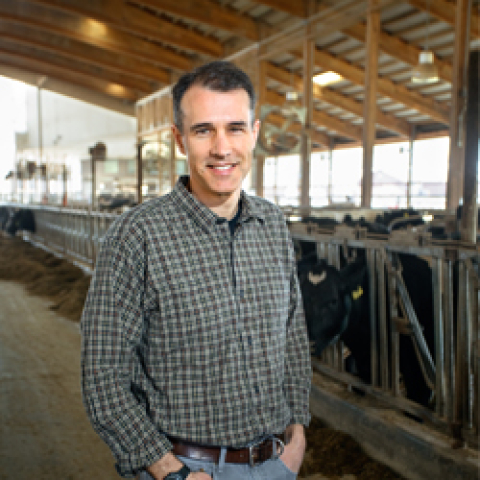
Daryl Nydam
· Faculty Director, Atkinson Center for SustainabilityVerifiedCornell University · Public Health and Food Safety
Active 1998–2024
Research topics
- Internal medicine
- Medicine
- Animal science
- Biology
- Endocrinology
- Sociology
- Chemistry
- Food science
- Obstetrics
- Veterinary medicine
- Bioinformatics
- Biochemistry
Selected publications
Journal of Dairy Science · 2022 · 25 citations
- Animal science
- Biology
- Internal medicine
The 3 branched-chain AA (BCAA), Val, Leu, and Ile, are essential AA used by tissues as substrates for protein synthesis and energy generation. In addition, BCAA are also involved in modulating cell signaling pathways, such as nutrient sensing and insulin signaling. In our previous study, dietary BCAA supplementation was shown to improve protein synthesis and glucose homeostasis in transition cows. However, a more detailed understanding of the changes in metabolic pathways associated with an increased BCAA availability is desired to fine-tune nutritional supplementation strategies. Multiparous Holstein cows (n = 20) were enrolled 28 d before expected calving and assigned to either the BCAA treatment (n = 10) or the control group (n = 10). Cows assigned to BCAA were fed 550 g/d of rumen-protected BCAA mixed with 200 g/d of dry molasses from calving until 35 DIM, whereas the cows assigned to the control were fed only 200 g/d of dry molasses. Serum samples were collected on d 10 before expected calving, as well as on d 4 and d 21 postpartum. Milk samples were collected on d 14 postpartum. From a larger cohort, we selected 20 BCAA-supplemented cows with the greatest plasma urea nitrogen concentration, as an indicator for greater BCAA availability, for the metabolomics analysis herein. Serum and milk samples were subjected to a liquid chromatography-mass spectrometry-based assay, detecting and measuring the abundance of 241 serum and 211 milk metabolic features, respectively. Multivariable statistical analyses revealed that BCAA supplementation altered the metabolome profiles of both serum and milk samples. Increased abundance of serum phosphocholine and glutathione and of milk Val, Ile, and Leu, and decreased abundance of milk acyl-carnitines were associated with BCAA supplementation. Altered phosphocholine and glutathione abundances point to altered hepatic choline metabolism and antioxidant balance, respectively. Altered milk acyl-carnitine abundances suggest changes in mammary fatty acid metabolism. Dietary BCAA supplementation was associated with a range of alterations in serum and milk metabolome profiles, adding to our understanding of the role of BCAA availability in modulating dairy cow protein, lipid, and energy metabolism on a whole-body level and how it affects milk composition.
JDS Communications · 2022 · 6 citations
- Medicine
- Obstetrics
- Animal science
The objective was to evaluate a liver health index (LHI) by evaluating its association with negative health events, milk yield, and risk of pregnancy within 150 d in milk (DIM). In a retrospective cohort study, an LHI was calculated based on plasma albumin, cholesterol, and bilirubin concentrations for 265 primiparous and 611 multiparous cows 3 to 12 DIM enrolled across 72 farms in the northeastern United States. Mixed effects linear regression models were used to evaluate if (1) metritis (MET), (2) displaced abomasum (DA), (3) clinical ketosis (CK), (4) one or more of the 3 disorders (MET, DA, or CK), (5) 2 or more of the 3 disorders (MET, DA, or CK), or (6) culling within 30 DIM was associated with LHI. Mixed effects linear regression models were used to evaluate if LHI was associated with 305-d mature equivalent milk at the fourth test day (ME305; mean ± standard deviation: 114 ± 13 DIM) and a Cox proportional hazards model was used to evaluate if LHI was associated with pregnancy within 150 DIM. Cows that were diagnosed with MET, DA, CK, one or more of the disorders, 2 or more of the disorders, or were culled within 30 DIM had a lower LHI than cows that were not diagnosed with a disorder or culled. A 1-unit increase in LHI was associated with a 154 ± 38 kg increase in ME305 and a 8% increased risk of pregnancy within 150 DIM [hazard ratio (95% confidence interval): 1.08 (1.03 to 1.14)] for multiparous cows; however, we did not identify a relationship between LHI and ME305 or pregnancy within 150 DIM for primiparous cows. These results suggest that the LHI is associated with health, milk yield, and pregnancy within 150 DIM for multiparous cows and health for primiparous cows; therefore, the LHI can be used as a tool to evaluate transition cow success.
Journal of Dairy Science · 2022 · 41 citations
- Animal science
- Medicine
- Internal medicine
The objectives were as follows: (1) establish cow-level thresholds for prepartum nonesterified fatty acids (NEFA) and postpartum NEFA, β-hydroxybutyrate (BHB), and haptoglobin (Hp) concentrations associated with negative health events; (2) evaluate cow-level associations between biomarkers and 305-d mature equivalent milk at the fourth test day (ME305) and reproductive performance; and (3) identify herd-alarm levels (proportion of cows sampled above the critical threshold) for biomarkers that are associated with herd-level changes in disorder incidence (displaced abomasum and clinical ketosis), reproductive performance, and ME305. In a prospective cohort study, 1,473 cows from 72 farms were enrolled from the northeastern United States. Blood samples were collected from the same 11 to 24 cows per herd during the late-prepartum and early-postpartum periods. Whole blood was analyzed for postpartum BHB concentrations; plasma was analyzed for prepartum and postpartum NEFA and postpartum Hp concentrations. Critical thresholds for the biomarkers associated with health events for all cows were established using a receiver operating characteristic curve analysis. Poisson, linear mixed effects, and Cox proportional hazards models investigated the association of the biomarkers with health and performance. The prepartum NEFA and Hp threshold associated with culling was ≥0.17 mmol/L and 0.45 g/L, respectively. The postpartum NEFA and BHB thresholds associated with diagnosis of metritis, displaced abomasum, or clinical ketosis were ≥0.46 mmol/L and ≥0.9 mmol/L, respectively. Multiparous cows with prepartum NEFA concentration ≥0.17 mmol/L produced 479 kg less ME305. Multiparous and primiparous cows with postpartum NEFA concentration ≥0.46 mmol/L produced 280 kg less and 446 kg more ME305, respectively. Cows with BHB concentration ≥0.9 and ≥1.1 mmol/L produced 552 kg more ME305 and had a 20% decreased risk of pregnancy within 150 d in milk, respectively; however, multiparous cows with BHB concentration ≥1.5 mmol/L produced 376 kg less ME305. Cows with Hp concentration ≥0.45 g/L produced 492 kg less ME305 and had 28% decreased risk of pregnancy within 150 DIM. Cows with Hp concentration ≥0.45 g/L had 19% decreased pregnancy risk to first service (PRFS). Herds above the herd-alarm levels for prepartum NEFA had a 6.0-percentage unit increase in disorder incidence and a 6.0-percentage unit decrease in 21-d pregnancy rate (PR) for multiparous cows, a 3.9-percentage unit increase in PR and a 5.8-percentage unit increase in the probability of pregnancy for primiparous cows. Herds above the herd-alarm levels for postpartum NEFA had a 5.8- and 4.2-percentage unit increase in disorder incidence for multiparous and primiparous cows, respectively, a 789 kg decrease in ME305 for multiparous cows, and a 6.8- and 6.3-percentage unit decrease and increase in PR and PRFS for multiparous cows, respectively. Herds above the herd-alarm levels for BHB had an 8.5-percentage unit increase in disorder incidence, a 332 and 229 kg increase in ME305 for primiparous and multiparous cows, respectively, and a 3.2-, 5.2-, and 7.0-percentage unit decrease in PR, probability of pregnancy, and PRFS, respectively. Herds above the herd-alarm levels for postpartum Hp had a 5.3-percentage unit increase in disorder incidence. At the cow level and herd level, elevated biomarker concentrations were associated with an increased disorder risk and varied performance responses.
Journal of Dairy Science · 2021 · 13 citations
- Animal science
- Chemistry
- Internal medicine
Essential amino acids (EAA) are critical for multiple physiological processes. Branched-chain amino acid (BCAA) supplementation provides energy substrates, promotes protein synthesis, and stimulates insulin secretion in rodents and humans. Most dairy cows face a protein and energy deficit during the first weeks postpartum and utilize body reserves to counteract this shortage. The objective was to evaluate the effect of rumen-protected BCAA (RP-BCAA; 375 g of 27% l-leucine, 85 g of 48% l-isoleucine, and 91 g of 67% l-valine) with or without oral propylene glycol (PG) administration on markers of liver health status, concentrations of nonesterified fatty acids (NEFA) and β-hydroxybutyrate (BHB) in plasma, and liver triglycerides (TG) during the early postpartum period in dairy cows. Multiparous Holstein cows were enrolled in blocks of 3 and randomly assigned to either the control group or 1 of the 2 treatments from calving until 35 d postpartum. The control group (n = 16) received 200 g of dry molasses per cow/d; the RP-BCAA group (n = 14) received RP-BCAA mixed with 200 g of dry molasses per cow/d; the RP-BCAA plus PG (RP-BCAAPG) group (n = 16) received RP-BCAA mixed with 200 g of dry molasses per cow/d, plus 300 mL of PG, once daily from calving until 7 d in milk (DIM). The RP-BCAA and RP-BCAAGP groups, on average (± standard deviation), were predicted to receive a greater supply of metabolizable protein in the form of l-Leu 27.4 ± 3.5 g/d, l-Ile 15.2 ± 1.8 g/d, and l-Val 24.2 ± 2.4 g/d compared with the control cows. Liver biopsies were collected at d 9 ± 4 prepartum and at 5 ± 1 and 21 ± 1 DIM. Blood was sampled 3 times per week from calving until 21 DIM. Milk yield, dry matter intake, NEFA, BHB, EAA blood concentration, serum chemistry, insulin, glucagon, and liver TG and protein abundance of total and phosphorylated branched-chain ketoacid dehydrogenase E1α (p-BCKDH-E1α) were analyzed using repeated measures ANOVA. Cows in the RP-BCAA and RP-BCAAPG groups had lower liver TG and lower activities of aspartate aminotransferase and glutamate dehydrogenase during the first 21 DIM, compared with control. All cows, regardless of treatment, showed an upregulation of p-BCKDH-E1α at d 5 postpartum, compared with levels at 21 d postpartum. Insulin, Met, and Glu blood concentration were greater in RP-BCAA and RP-BCAAPG compared with control during the first 35 DIM. Therefore, the use of RP-BCAA in combination with PG might be a feasible option to reduce hepatic lipidosis in dairy cows during early lactation.
Elsevier eBooks · 2020
- Sociology
- Sociology
Frequent coauthors
- 86 shared
T.R. Overton
New York State College of Agriculture & Life Sciences
- 65 shared
Sabine Mann
New York State College of Veterinary Medicine
- 62 shared
A.K. Vasquez
Ithaca College
- 59 shared
Matthias Wieland
Cornell University
- 52 shared
P.D. Virkler
New York State College of Veterinary Medicine
- 51 shared
P.A. Ospina
- 46 shared
Hussni O. Mohammed
- 45 shared
P. Moroni
University of Milan
- Resume-aware match score
- Save to shortlist
- AI-drafted outreach
See your match with Daryl Nydam
PhdFit ranks faculty by your research interests, methods, and publications — grounded in their actual work, not templates.
- Free to start
- No credit card
- 30-second signup