About
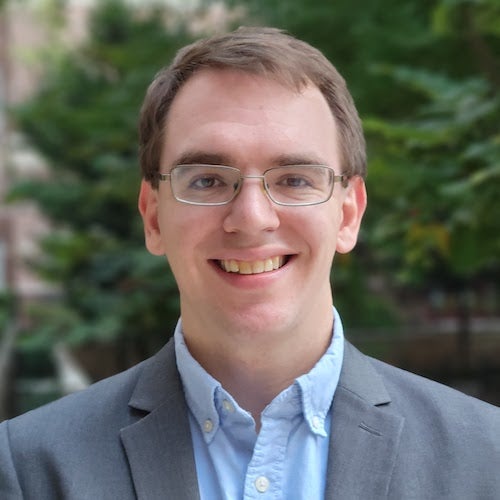
I am an Associate Professor and the Director of Graduate Studies in the Department of Political Science at Rice University. I received my PhD in Political Science from Stanford University in 2017. I was previously a Postdoctoral Fellow at Dartmouth College’s Program in Quantitative Social Science and an Assistant Professor at Texas A&M University. My research examines the political consequences of the decline of local media outlets and the growth of online news consumption, considering the capacity of media outlets to provide political news, the choices people make to consume (or avoid) political information, and the effects of exposure to political messages on public opinion in this changing media environment.
Research topics
- Political Science
- Sociology
- Psychology
- Business
- Public relations
- Economics
- Advertising
- Computer Science
- Political economy
- Media studies
- Social psychology
- Microeconomics
- Law
- Gender studies
Selected publications
Designing for Power: Covariates, Indices, and Efficiency in Survey Experiments
SSRN Electronic Journal · 2026-01-01
preprintOpen access1st authorCorrespondingThe Fragility of the Local News Trust Advantage: Evidence from Republican Attacks on Local News
PS Political Science & Politics · 2025-01-07 · 4 citations
articleSenior authorABSTRACT Today, few political news outlets receive universally favorable evaluations from the American public. In retaining broad public approval, local media remain a notable exception that is important to understand. We consider the durability of local news trust to criticism from politicians, focusing on Republican elites because they generally are more willing to attack the media than Democrats. In a survey experiment, we find that exposure to a Republican politician’s attack on a local newspaper dramatically reduces the public’s trust in and intent to use local news. This attack is particularly effective among Republicans, although it also leads Democrats and Independents to negatively shift their views of the local newspaper. Among those exposed to elite criticism of local news, overall trust and partisan divides between Republicans and Democrats resemble those for national media. This shows that the credibility of local news depends on the absence of elite criticism rather than resilience to it.
Election Denial as a News Coverage Dilemma: A Survey Experiment with Local Journalists
Political Communication · 2025-01-29 · 3 citations
article1st authorAmerican Journal of Political Science · 2025-03-29 · 1 citations
articleOpen access1st authorCorrespondingAbstract Despite eroding consensus about credible political news sources, much of the public still trusts local media. We assess the emergence, sources, and implications of the trust advantage local news holds over national media. We argue the public now uses a news outlet's local orientation as a shortcut to assess its credibility. In survey experiments, we find unfamiliar news outlets are trusted more when they have a local cue in their name. In surveys where people evaluate digital sources covering their community, this heuristic leads the public to trust unreliable information providers that signal a local focus more than high‐quality sources that do not. Our findings position local media as unique, broadly trusted communicators while also illustrating a logic behind recent efforts to disseminate biased political information by packaging it as local news. More broadly, we show the challenges that arise when the public applies once‐reliable heuristics in changing political circumstances.
Public Opinion Quarterly · 2025-08-20
article1st authorCorresponding2025-03-23
preprintOpen access1st authorCorrespondingDespite eroding consensus about credible political news sources, much of the public still trusts local media. We assess the emergence, sources and implications of the trust advantage local news holds over national media. We argue the public now uses a news outlet's local orientation as a shortcut to assess its credibility. In survey experiments, we find unfamiliar news outlets are trusted more when they have a local cue in their name. In surveys where people evaluate digital sources covering their community, this heuristic leads the public to trust unreliable information providers that signal a local focus more than high-quality sources that do not. Our findings position local media as unique, broadly trusted communicators while also illustrating a logic behind recent efforts to disseminate biased political information by packaging it as local news. More broadly, we show the challenges that arise when the public applies once-reliable heuristics in changing political circumstances.
Making Issues Matter: Local Media and Policy-Based Evaluations of Politicians
Political Behavior · 2024-10-04
article1st authorCorrespondingIndirect Influence: How Elite Attacks on Information Providers Affect Public Opinion Formation
2024-03-25
preprintOpen access1st authorCorrespondingAttacks from politicians can dramatically reduce public trust in sources of expertise and information. We consider the consequences of such criticism and argue that by shaping which information providers their supporters consider credible, politicians can exert indirect influence over public opinion formation. In two survey experiments that link elite criticism of the media to other outcomes, we show politicians who discredit a media outlet cause their supporters to avoid the targeted news source and perceive more bias in its coverage. Partisan attacks also reduce the subsequent effect of the news source's coverage on public opinion, although people are unable to fully discount information from sources they deem untrustworthy due to this rhetoric. Looking beyond direct means of elite influence such as positional cues and policy arguments, we show how harming the reputations of information providers allows politicians to indirectly influence the views of their supporters.
2024-05-12
preprint1st authorCorrespondingDespite eroding consensus about credible political news sources, much of the public still trusts local media. We assess the emergence, sources and implications of the trust advantage local news holds over national media. We argue the public now uses a news outlet's local orientation as a shortcut to assess its credibility. In survey experiments, we find unfamiliar news outlets are trusted more when they have a local cue in their name. In surveys where people evaluate digital sources covering their community, this heuristic leads the public to trust unreliable information providers that signal a local focus more than high-quality sources that do not. Our findings position local media as unique, broadly trusted communicators while also illustrating a logic behind recent efforts to disseminate biased political information by packaging it as local news. More broadly, we show the challenges that arise when the public applies once-reliable heuristics in changing political circumstances.
2024-05-12 · 1 citations
preprintOpen access1st authorCorrespondingDespite eroding consensus about credible political news sources, much of the public still trusts local media. We assess the emergence, sources and implications of the trust advantage local news holds over national media. We argue the public now uses a news outlet's local orientation as a shortcut to assess its credibility. In survey experiments, we find unfamiliar news outlets are trusted more when they have a local cue in their name. In surveys where people evaluate digital sources covering their community, this heuristic leads the public to trust unreliable information providers that signal a local focus more than high-quality sources that do not. Our findings position local media as unique, broadly trusted communicators while also illustrating a logic behind recent efforts to disseminate biased political information by packaging it as local news. More broadly, we show the challenges that arise when the public applies once-reliable heuristics in changing political circumstances.
Frequent coauthors
- 76 shared
Shanto Iyengar
Stanford University
- 72 shared
Sean Westwood
- 44 shared
Jonathan Mummolo
- 9 shared
Ali Kagalwala
Texas A&M University
- 9 shared
Maxwell B. Allamong
Duke University
- 6 shared
Manuela Muñoz
- 5 shared
Gábor Simonovits
Central European University
- 4 shared
Shannon C. McGregor
Life University
Education
- 2017
Ph.D., Political Science
Stanford University
- Resume-aware match score
- Save to shortlist
- AI-drafted outreach
See your match with Erik Peterson
PhdFit ranks faculty by your research interests, methods, and publications — grounded in their actual work, not templates.
- Free to start
- No credit card
- 30-second signup