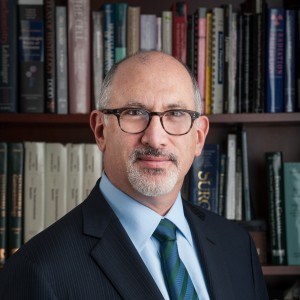
Jeffrey B. Matthews
· Chair, Department of SurgeryVerifiedUniversity of Chicago · Plastic and Reconstructive Surgery
Active 1974–2025
About
Jeffrey B. Matthews, MD, is the Chair of Surgery and the Dallas B. Phemister Distinguished Service Professor of Surgery at the University of Chicago. As a leader in the Department of Surgery, he is part of a distinguished institution known for its history of surgical innovation and research excellence. The department emphasizes a tripartite mission of clinical practice, research, and education, with a focus on translational research, advanced technology, and comprehensive training programs. Dr. Matthews's role involves guiding the department's strategic vision, fostering collaborations across surgical specialties and academic units, and maintaining a commitment to discovery, innovation, and patient-centered care. The department has a storied history of pioneering surgical procedures and research breakthroughs, including the first living-related liver transplant and advances in minimally invasive and robotic surgery, reflecting a tradition of integrating research with clinical practice.
Research topics
- Medicine
- Intensive care medicine
- Pathology
- Surgery
- Computer Science
- Computer Security
- Medical emergency
- Emergency medicine
- Internal medicine
- Risk analysis (engineering)
- Family medicine
- Virology
- Environmental health
Selected publications
Enhancing equity in academic surgery promotion practices
Surgery · 2025-01-20 · 4 citations
articleTraining the Surgeon-Scientist
Annals of Surgery · 2025-06-12 · 1 citations
article1st authorCorrespondingAmerican Surgical Association 2025
Annals of Surgery · 2025-11-26
articleSenior authorA rendezvous approach for ampullary access in a strictured duodenojejunostomy
VideoGIE · 2025-01-07
articleOpen accessERCP frequently is performed to achieve biliary drainage, which requires identification and cannulation of the biliary orifice at the ampulla.1 However, access to the biliary orifice can be challenging in some conditions such as postsurgical anatomy or duodenal strictures.2,3 This video case report (Video 1, available online at www.videogie.org) demonstrates multimodal ways to achieve ampullary access.
Surgical advocacy as an academic career path: A guide for promotion discussions
Surgery · 2025-09-09
articleSurgeon as advocate: A widening lane
Surgery · 2025-06-23 · 4 citations
articleSenior authorFaculty Development in an Academic Trauma Center
2024-01-01
book-chapterSenior authorAnnals of Surgery · 2024-05-29 · 14 citations
articleOpen accessOBJECTIVE: An expert panel made recommendations to optimize surgical education and training based on the effects of contemporary challenges. BACKGROUND: The inaugural Blue Ribbon Committee (BRC I) proposed sweeping recommendations for surgical education and training in 2004. In light of those findings, a second BRC (BRC II) was convened to make recommendations to optimize surgical training considering the current landscape in medical education. METHODS: BRC II was a panel of 67 experts selected on the basis of experience and leadership in surgical education and training. It was organized into subcommittees which met virtually over the course of a year. They developed recommendations, along with the Steering Committee, based on areas of focus and then presented them to the entire BRC II. The Delphi method was chosen to obtain consensus, defined as ≥80% agreement among the panel. Cronbach α was computed to assess the internal consistency of 3 Delphi rounds. RESULTS: Of the 50 recommendations, 31 obtained consensus in the following aspects of surgical training (# of consensus recommendation/# of proposed): Workforce (1/5); Medical Student Education (3/8); Work Life Integration (4/6); Resident Education (5/7); Goals, Structure, and Financing of Training (5/8); Education Support and Faculty Development (5/6); Research Training (7/9); and Educational Technology and Assessment (1/1). The internal consistency was good in Rounds 1 and 2 and acceptable in Round 3. CONCLUSIONS: BRC II used the Delphi approach to identify and recommend 31 priorities for surgical education in 2024. We advise establishing a multidisciplinary surgical educational group to oversee, monitor, and facilitate implementation of these recommendations.
Alignment of RVU Targets With Operating Room Block Time
Annals of Surgery Open · 2023-02-22 · 6 citations
articleOpen accessBackground: Surgeon productivity is measured in relative value units (RVUs). The feasibility of attaining RVU productivity targets requires surgeons to have enough allocated block time to generate RVUs. However, it is unknown how much block time is required for surgeons to attain specific RVU targets. We aimed to estimate the effect of surgeon and practice environment characteristics (SPECs) on block time needed to attain fixed RVU targets. Methods: We computationally simulated individual surgeons' annual caseloads under a variety of SPECs in the following way. First, empirical case data were sampled from ACS NSQIP in accordance with surgeon specialty, case-mix complexity, and RVU target. Surgeons' operating schedules were then constructed according to the block length, turnover time, and scheduling flexibility of the practice environment. These 6 SPECs were concurrently varied over their ranges for a 6-way sensitivity analysis. Results: Annual operating schedules for 60,000,000 surgeons were simulated. The number of blocks required to attain RVU targets varied significantly with surgeon specialty and increased with increased case-mix complexity, increased turnover time, and decreased scheduling flexibility. Intraspecialty variation in block requirement with variation in environmental characteristics exceeded interspecialty variation with fixed environmental characteristics. Multivariate linear models predicted block utilization across surgical specialties with consideration for the stated factors. An online tool is shared with which to apply these results to one's particular practice. Conclusions: Block time required to attain RVU targets varies widely with SPECs; intraspecialty variation exceeds interspecialty variation. The feasibility of attaining RVU targets requires alignment between targets and allocated operating time with consideration for surgical specialty and other practice conditions.
Open science practices in research published in surgical journals: A cross-sectional study
medRxiv · 2023-05-03 · 2 citations
preprintOpen accessSenior authorAbstract Open science practices are research tools used to improve research quality and transparency. These practices have been used by researchers in various medical fields, though the usage of these practices in the surgical research ecosystem has not been quantified. In this work, we studied the use of open science practices in general surgery journals. Eight of the highest-ranked general surgery journals by SJR2 were chosen and their author guidelines were reviewed. From each journal, 30 articles published between January 1, 2019 and August 11, 2021 were randomly chosen and analyzed. Five open science practices were measured (preprint publication prior to peer-reviewed publication, use of Equator guidelines, study protocol preregistration prior to peer-reviewed publication, published peer review, and public accessibility of data, methods, and/or code). Across all 240 articles, 82 (34%) used one or more open science practices. Articles in the International Journal of Surgery showed greatest use of open science practices, with a mean of 1.6 open science practices compared to 0.36 across the other journals (p<.001). Adoption of open science practices in surgical research remains low, and further work is needed to increase utilization of these tools.
Recent grants
NIH · $2.5M · 2005
NIH · $3.5M · 2010
NIH · $588k · 1999
Frequent coauthors
- 111 shared
Ajit K. Sachdeva
American College of Surgeons
- 109 shared
Alisa Nagler
American College of Surgeons
- 109 shared
Patrice Gabler Blair
American College of Surgeons
- 109 shared
Steven C. Stain
Lahey Hospital and Medical Center
- 108 shared
L. D. Britt
The Ohio State University
- 106 shared
Kathryn Spanknebel
New York Medical College
- 106 shared
Mohsen Shabahang
WellSpan Health
- 104 shared
Diana L. Farmer
University of California, Davis
Awards & honors
- Dallas B. Phemister Distinguished Service Professor of Surge…
- Resume-aware match score
- Save to shortlist
- AI-drafted outreach
See your match with Jeffrey B. Matthews
PhdFit ranks faculty by your research interests, methods, and publications — grounded in their actual work, not templates.
- Free to start
- No credit card
- 30-second signup