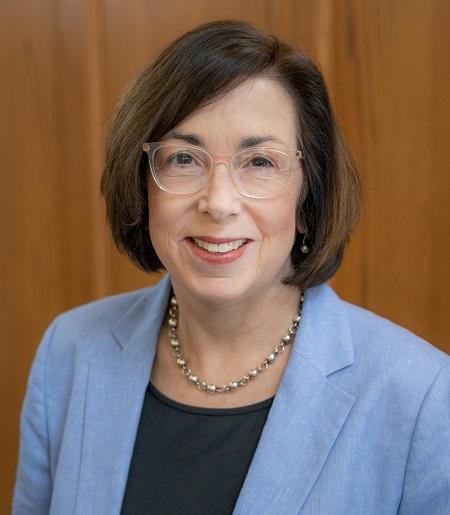
Suzanne Mettler
· John L. Senior Professor of American Institutions Department Chair American Studies Program Center for the Study of Inequality GovernmentVerifiedCornell University · Political Science
Active 1992–2025
About
Suzanne Mettler is the John L. Senior Professor of American Institutions in the Government Department at Cornell University. Her research and teaching interests encompass American political development, inequality, public policy, political behavior, and democracy. She has authored several influential books, including her latest work, Rural Versus Urban: The Growing Divide that Threatens Democracy, co-authored with Trevor Brown and forthcoming from Princeton University Press in 2025. Her previous books address critical issues in American democracy and public policy, such as Four Threats: The Recurring Crises of American Democracy, The Government-Citizen Disconnect, Degrees of Inequality: How The Politics of Higher Education Sabotaged the American Dream, The Submerged State: How Invisible Government Programs Undermine American Democracy, Dividing Citizens: Gender and Federalism In New Deal Public Policy, and Soldiers to Citizens: The G.I. Bill and the Making of the Greatest Generation. These works have earned her numerous prestigious awards, including the Alexander George Book Award, the Kammerer Book Award twice, and the J. David Greenstone Award. Mettler has published extensively in leading refereed journals such as the American Political Science Review and Perspectives on Politics, and her essays and op-eds have appeared in major popular outlets including the New York Times, Los Angeles Times, Chronicle of Higher Education, and Washington Monthly. She has also been featured on National Public Radio, PBS NewsHour, and CBS Good Morning. Elected to the American Academy of Arts and Sciences, Mettler has received Guggenheim and Radcliffe Fellowships, as well as grants from the Robert Wood Johnson Foundation and Spencer Foundation. She held the Kluge Chair in American Law and Governance at the Library of Congress and serves as the Academic Director of the Scholars Strategy Network. Her leadership roles include serving on the board of the American Academy of Political and Social Sciences as treasurer, secretary of the American Political Science Association, and president of APSA's Politics and History and Public Policy sections. She is also a founder of the American Democracy Collaborative, a group of scholars dedicated to evaluating the health of democracy in the United States.
Research topics
- Political Science
- Computer Science
- Economics
- Sociology
- Law
- Computer Security
- Development economics
- Political economy
- Public economics
- Demographic economics
Selected publications
Rural Politics in the United States
Annual Review of Political Science · 2025-06-17 · 2 citations
articleOpen accessSenior authorScholars of American politics have recently turned their attention to rural politics, aiming to understand the late twentieth and early twenty-first century nationwide shift of white rural voters to the Republican Party and the ensuing rural–urban political divide. We review research that assesses the potential causes of the rise of place-based polarization, including political–economic transformation, racism, ethnocentrism, and the growing salience of social issues. We also consider its consequences, such as increased levels of social polarization and institutional threats to democracy. Most research to date has focused on individuals, whether to specify rural identity and its correlates or to probe public opinion and political behavior. We recommend that scholars broaden their scope of inquiry to include factors at the meso and macro levels by studying the interplay between place and institutions, public policies, and organizations as well as broader political, economic, and social developments. This will entail attention to change over time. We suggest that scholars resist cordoning off this research area into rural studies and instead engage with broad questions about the functioning of American democracy.
How the Transformation of the American Political Economy Spurred a Rural-Urban Political Divide
2025-08-27
book-chapterSenior authorAbstract Since the 1990s, a new geographic political cleavage has emerged in the United States as rural non-Hispanic white people nationwide shifted to become staunch supporters of Republican candidates, while Democrats consolidated their long-standing support in urban areas. Why did this sweeping political change occur when it did, polarizing politics by place? We argue that transformations in American capitalism, promoted by public policy, prompted political change in both rural and urban places, spurring the divide. Rural places had enjoyed a prominent location in US public policies dating back to the New Deal, but they lost that status from the 1980s onward as policymakers—including some prominent Democrats—restructured the American political economy, removing previous constraints on capitalism. Rural areas became increasingly “left behind” and delinked from the prosperity enjoyed in urban areas, sparking resentment. Starting in the late 1990s, white rural dwellers became disenchanted with the Democratic Party and gradually abandoned it. By the early 2000s and beyond, they defined themselves in reaction to what they perceived as overbearing Democratic Party elites who were attempting to impose policies on them without their input. The Republican Party, catering to these demands, increasingly attracted rural dwellers. The rural-urban divide has now become deeply entrenched and threatens democracy itself, in part because of the institutional advantage it offers an increasingly extreme Republican Party.
Princeton University Press eBooks · 2025-09-23
book1st authorCorrespondingHow the urban-rural divide drives partisan polarization Why have Americans living in different places come to experience politics as a battle between “us” and “them”? In Rural Versus Urban , Suzanne Mettler and Trevor Brown argue that political polarization is not just about red states and blue states, or coastal elites who alienate those in fly-over country. Instead, polarization permeates every region and every state—and has become organized through a pernicious rural-urban division. Mettler and Brown explain the evolution of this gulf across five decades, charting political trends in both places. Drawing on data on individuals, communities, and members of Congress, as well as interviews with local party leaders and former elected officials, they show how the divide emerged and why it poses a threat to democracy. Until about thirty years ago, both political parties attracted support from rural and urban voters. But after place-based inequality grew due to deregulation and trade liberalization, white rural dwellers began to view urban people and Democrats as affluent elites out of touch with their needs. Politically active evangelical churches, antiabortion organizations, and gun groups helped deepen the divide, encouraging many of these rural residents to become staunch supporters of the GOP. Now, regional one-party rule in rural America gives Republicans a systematic edge for gaining control of crucial political institutions, including the Senate, House of Representatives, the Presidency, and even the Supreme Court. This is helping enable an extremist political party and pushing democracy to the brink. Mettler and Brown argue that the divide can be repaired—but only if the Democrats build their own robust local organizations and offer citizens a meaningful choice.
Princeton University Press eBooks · 2025-09-23
book1st authorCorrespondingA rural-urban political divide among whom? Race, ethnicity, and political behavior across place
Politics Groups and Identities · 2024-03-31 · 17 citations
articleCorrespondingOver the past 30 years, the United States has developed a rural-urban political divide, as rural voters have become increasingly reliable Republican voters while long-term patterns of Democratic voting in the largest cities have also consolidated in many smaller cities and suburbs as well. Yet, although 1 in 4 rural dwellers now identify as people of color, research on the rural-urban divide has either mostly centered on the behavior and attitudes of non-Hispanic whites, or assumed that nonwhites have exhibited similar behavior to whites. Does this political cleavage exist among people of color? We find that the growing rural-urban divide is driven primarily by white Americans, while rural people of color differ much less, if at all, from their urban counterparts in voting behavior and policy attitudes. In addition to highlighting the need for more research on the politics of rural people of color, our findings raise concerns about the political representation of rural Black Americans and Latinos.
Harvard Dataverse · 2023-10-16
datasetOpen accessSenior authorThese files replicate the descriptive portions of "Polarizing by Place: The Development of the Rural-Urban Political Divide, 1976–2020." Because the rest of the data used to produce regression estimates are being used for a book under contract, they have been placed under embargo until Monday, Dec. 16, 2024. Once the embargo is lifted, they will be released here. For more information, please see the read.me .txt file.
The Crisis of American Democracy in Historical Context
The Annals of the American Academy of Political and Social Science · 2023-07-01 · 2 citations
articleSenior authorThe present is not the only time in American history that American democracy has been at serious risk of backsliding. When we place recent developments in a broader historical and comparative context, we discover that any of four known threats to democracy can weaken it and lead to backsliding. These include political polarization, conflict over who belongs in the political community, high and rising economic inequality, and executive aggrandizement. American democracy has often been fragile, and each past episode of democratic fragility was characterized by some configuration of these four. Now, for the first time in our nation’s history, we face the confluence of all four threats at once. Analyzed through this framework, the January 6, 2021, attack on the U.S. Capitol was not a surprise. Although the attempts to overturn the 2020 election failed, the threats remain with us.
Routledge eBooks · 2023 · 40 citations
1st authorCorresponding- Computer Science
- Computer Science
How do policies, once created, reshape politics, and how might such transformations in turn affect subsequent policymaking? This chapter explores policy feedback theory: the ability of policies—through their design, resources, and implementation—to shape the attitudes and behaviors of political elites and institutions, organized interests, and mass publics with consequences for subsequent policymaking efforts. The chapter begins with a brief overview of the intellectual development of policy feedback theory before describing the four main streams of feedback inquiry and their mechanisms. It then considers new advances in and challenges to the study of policy feedback as well as opportunities for the future development of the field. In particular, it highlights new research that shows how federalism, political polarization, and structural inequality may mitigate feedback effects.
Sequential Polarization: The Development of the Rural-Urban Political Divide, 1976–2020
Perspectives on Politics · 2023-12-27 · 51 citations
articleOpen accessSenior authorAs recently as the early 1990s, Americans living in rural and urban areas voted similarly in presidential elections, yet in the decades since, they have diverged sharply as rural people in all regions of the country have increasingly supported the Republican Party. We seek to explain the sources of this growing cleavage by examining two interrelated processes of change: political-economic transformation that elevated many urban areas and marginalized rural ones, and the nationalization of policy goals. Our analytical approach is developmental, probing the timing and sequencing of trends across more than four decades. It is also comprehensive, testing theories related to economic decline, the educational gap, organizational mobilization, and racism and racial and ethnic threat. Our analysis reveals that while rural and urban counties resembled each other in several respects in the 1970s, they have since moved apart. We examine how key trends relate to political change in presidential voting. We find that in the 1990s and early 2000s, rural dwellers in places experiencing population loss or economic stagnation began to support Republican candidates. Then from 2008 to 2020, those in areas with higher percentages of less-educated residents, a higher presence of evangelical congregations per capita, and higher levels of anti-Black racism, each more prevalent in rural areas than urban areas, shifted their support to Republicans. Through sequential processes of polarization, with political-economic forces leading the way and activating rural resistance to the nationalization of policy goals subsequently, the rural-urban political divide emerged as a major fault line in the nation’s politics.
Policy Threat, Partisanship, and the Case of the Affordable Care Act
American Political Science Review · 2022-07-14 · 27 citations
articleOpen access1st authorCorrespondingHow do political conditions influence whether public support develops for a new policy? Specifically, does the presence of partisan polarization and a viable threat to a policy’s continuation prevent the emergence of such support? We propose a theoretical framework that considers how policy feedback may be affected by the presence or absence of both policy threat and polarization. We argue that a threat is likely to increase policy salience and trigger loss aversion, expanding policy feedback even amid strong partisanship. We examine the threat to the Affordable Care Act after Republicans won control of Congress and the White House and stood poised to act on their long promise to repeal the law. Five waves of panel data permit analysis of how individuals’ responses to the law changed over time, affecting their support for it as well as their voting calculations. The results suggest that policy threat heightens the effect of policy feedback for some populations while depressing it for others, in some cases mitigating partisan polarization, and overall boosting program support.
Frequent coauthors
- 3602 shared
Joe Soss
- 3600 shared
Terry Gilmour
Midland College
- 3600 shared
Erik Bleich
Friedrich-Alexander-Universität Erlangen-Nürnberg
- 3600 shared
Adam J. Berinsky
Massachusetts Institute of Technology
- 3600 shared
Jennifer L. Hochschild
- 3600 shared
Janet M. Box‐Steffensmeier
The Ohio State University
- 3600 shared
Deborah J. Yashar
- 3600 shared
Kathleen McNamara
Mike O'Callaghan Federal Medical Center
Awards & honors
- 2019 Radcliffe Institute fellow
- Guggenheim fellowship
- Resume-aware match score
- Save to shortlist
- AI-drafted outreach
See your match with Suzanne Mettler
PhdFit ranks faculty by your research interests, methods, and publications — grounded in their actual work, not templates.
- Free to start
- No credit card
- 30-second signup